All posts by Teri

My Stolen Diaries — Chapter 34: The Name Game

CHAPTER 34

THE NAME GAME

July 4, 1967

Mom and Rob returned from their honeymoon two days ago, and I moved to Westport today. I couldn’t bear to say goodbye to any of my friends, so I refused to do so.

I had almost nothing to take with me—just a handful of clothes and Adam’s piano, which filled the entire moving truck. I said a silent goodbye to Bridgeport, Success Park, and to everything and everyone I ever loved there, and I was proud of myself for not breaking down.

Until it came time to say goodbye to Mem—that’s when everything hit me. We fell into each other’s arms and sobbed, loud and heaving, our faces sopping wet from each other’s tears. Mom scolded Mem for riling me up. I wanted to scold her for scolding Mem, but I was hoping for a good moving-to-Westport day with Mom, so, as usual, I kept my thoughts to myself.

When Mom turned onto Brook Glen, the wooden sign read “Dead End.” I prayed this move wouldn’t be a dead end for me. A babbling brook ran alongside the road on both sides, like something out of a postcard. My nose was pressed against the car window, dumbstruck.

Rob’s house, set far back from the street, was even more beautiful than I had imagined, and there were only four houses on Brook Glen. The long driveway was covered in crushed stone that made a crunching sound as we pulled up to the house.

The first room we entered was Rib’s. Yes, Rib has his own room, the “prep kitchen,” and he settled in just fine. He dragged his doggie bed just outside the pantry door and set up camp. Can you imagine having two kitchens in one house?

Then Mom took me to my bedroom, the sight of which brought tears of both joy and sadness to my eyes. I was walking into my new room, my new life, while leaving my old life behind.

At first, I was upset with Mom because my closet was full of clothing she’d bought for me without my approval. But when I saw how excited she was to finally have the money to buy me so many beautiful, expensive things, I didn’t have the heart to be angry. Even though I hated the clothes she picked out, I know she tried her best.

As I organized my bedroom, I felt guilty for not feeling more grateful, as I took it all in. A plush lavender area rug, partially covering a beautiful oak floor, and a queen-size canopy bed covered in purple gingham.

There were windows on three sides of the room, filling it with bright sunlight. Looking out the windows, I saw shrubs, lawns, and trees instead of rundown buildings. My bedroom was so large that it had plenty of room for Adam’s piano.

As I folded and put away more ridiculously expensive clothes Mom left on the bed, the day’s news blared from the TV. Yes, I have a television in my room.

The Jews in Israel had just defeated the Arabs in a six-day war. I watched with mild interest—only because of Naomi. It reminded me of how much I missed her.

I miss all my Bridgeport friends, especially Chris. But Mom says it’s time for me to make new friends and start a new life. I might be starting a new life, but I will never forget where I come from. Bridgeport is who I am, whether Mom likes it or not.

I think it’s going to be hard to start a new life, and I’m afraid, but what choice do I have? Whatever I say will only upset Mom, so I’ll keep doing what I always do and say nothing.

The great news, though, is that Mem made a deal with Mom that she’ll drive to us from Bridgeport every Friday night after work and stay until Monday morning. Mem will cook, clean, and do everything she did for us in Bridgeport. Mom and Rob agreed to pay her a salary, allowing Mem to quit her weekend side jobs. The best part of the deal is that I’ll have Mem with me in Westport every weekend.

I thought moving day was going well until Mom came into my room tonight and said, “Rob and I need to talk to you.” I figured I was in hot water about something.

When I sat with them at the kitchen table, Rob had a pad of paper. He wrote my name—Tony Michaels—then said, “Tony. It’s a boy’s name.” He crossed out Tony and scribbled Tonya on the paper, saying, “Now, Tonya, that’s a beautiful girl’s name.”

“Tonya?” I asked Rob, confused. “Yes,” Mom answered. “I agree with Rob. It’s a beautiful, very classy name. You’ll get used to it.”

My brain felt like it was on fire from the crazy thoughts racing through it. Were they seriously suggesting I change my first name?

“And look how good it looks with my last name,” Rob continued, writing down Tonya Russo. I stared incredulously at the name.

Then I gave Mom the death stare. “It’s pretty, but Tonya Russo isn’t my name. I’m Tony Michaels, Mom. That’s my name, and I’m good with it.”

My heart was racing, and I kept repeating the Hail Mary, praying they wouldn’t dare change my name. Mom looked at me, annoyed. “It’s your name now. Rob is adopting you. Your father gave you up. He doesn’t want you using his last name anymore, so you’ve got no choice.” Even as I screamed and cried and carried on, Mom and Rob ignored my pain.

But the worst pain was Mom’s words about my father. Those stinging words killed something inside me. How could my father not want me to use his last name? He gave me up. Why didn’t he fight for me? Why did Mom have to be so cruel? What had I ever done to deserve such excruciating pain?

Then Mom made me feel even worse by saying, “Take a look at yourself. You need a new identity and a new look. You have to stop biting your nails, and we need to do something about that hair.”

Mom continued, despite my sobbing. “And we’ve also decided to send you to Charm School. It’s called Junior Years, and your interview is next week. We live in Westport now, not in the Bridgeport slums. Those days are over, thank God. It’s time for you to play your part. From now on, you go by Tonya. Tonya Russo.”

I ran to my room in despair. Mom was right about one thing. We were all playing a part. I’m just a poor kid from the other side of the tracks in Bridgeport—Mom’s awkward, ugly duckling of a daughter. I’m not the Westport Tonya they’re hoping for. I am and always will be Bridgeport Tony. “TONY MICHAELS,” I screamed at the top of my lungs in my matchy lavender room, with my pink princess telephone, baby grand piano, and fancy-shmancy new life.

I called Mem and told her what happened, but she said she couldn’t do anything for me, even though she wanted to. Mem warned me not to make waves. She told me to be strong and do whatever Mom and Rob asked of me to keep the peace. Mem’s biggest fear was that she wouldn’t be allowed to see me, so she made me promise not to rock the boat.

So, my new name is Tonya Russo, and according to Mom, I’ll get used to it.

But I’ll never get used to the pain of my father giving me up. Or the shame that I wasn’t good enough for him or his name. Never, never, never.
Click here for Chapter 35: Ernie Barrett

The Dollhouse Chronicles


When I pressed “send,” 5,000 words of my 12,346-word manuscript, The Dollhouse Chronicles, were included in a required package due this past Sunday, ahead of a writing mentorship masterclass I am invited to attend in April.

I was both relieved to meet the deadline and deeply gratified that my book—a novel I have been working on for over two years—was finally put to bed.

But that night, after already sending off my submission, I woke before daybreak from a dream, or maybe it was my subconscious telling me that The Dollhouse Chronicles had not yet been “put to bed.”

Whatever it was, it showed me one of my female characters barefoot. When I sat up, I silently cursed myself for not adding that all-important detail to describe her fleeing a harrowing situation. Of course, she was barefoot.

I charged down three flights of stairs and opened The Dollhouse Chronicles Word doc. I added the word “barefoot” to the end of the second-to-last sentence of a narrative-driven flashback in chapter five. Though labeling it a chapter is nowhere near an accurate description of the gut-wrenching scene.

I’ve been struggling to capture the sections of my book in a way that is laudable and meritorious. The narrative breaks involving the three main girls in my manuscript deserve a poetic description worthy of their gritty characters and thriving spirits, not a rote label like “scenario,” “chapter,” “scene,” or “episode.”

Those three young ladies deserve a description that is far more visceral and evocative—something that does justice to their resilience, courage, and resolve.

And then it hit me.

I could call each section a vignette, a fitting and descriptive homage to the three powerhouse characters in my book. Wait. Had I just created a subtitle for my upcoming novel?

THE DOLLHOUSE CHRONICLES

A Collection of Vignettes

Yes. My three heroes were part of a collection of vignettes, and just like that, my book had a new title. However, I’ll wait to review it with my writing adviser before making the change.

And then came night two after my submission—and nights three and four.

Those nights were chock-full of vivid, intricate, multifaceted layers that clearly needed to be woven into my already-completed novel.

Each night, I jotted down the myriad visions, and each morning I added them to my manuscript.

This book, which I thought was finished, seems to have taken on a life of its own—morphing, developing, and rewriting itself.

And it’s obvious from the reams of notes I’m taking and making that I’m not finished with the manuscript because the manuscript is clearly not finished with me.

And so, I’ve been listening to the novel and updating what it wants me to say.

It feels ridiculous to say I’m listening to a novel. That, as the writer, I’m not in charge of my own words. Is that even possible?

I say yes.

The words flow easily and connect so fluidly that I know beyond a doubt that my book is in control.

And now The Dollhouse Chronicles is transforming itself day by day through vignettes.

The rich complexities of the characters in my trauma-based novel continue to reveal themselves in endless, intricate detail. My novel has proven itself to be a work in progress. Just like me.

UPDATE AS OF MARCH 6, 2026: I just watched the trailer for Hulu’s The Testaments, a highly-anticipated spin-off of The Handmaid’s Tale. The trailer opens with a new character, Agnes, who says she isn’t sure what year it is but knows she still has her dollhouse. Agnes says her dollhouse is just like her real house—filled with dolls, always busy, doing important work— but the little girl doll is her—back when she still believed in the world. The dollhouse in The Testaments symbolizes the characters’ dollhouse-like existence, emphasizing the stark difference between their idealized world and the brutal reality they confront.

The dollhouse in The Testaments serves as a reminder of the power of imagination and the potential for resistance against traumatic events, the exact theme of my book. Just so I’m clear here, I came up with the concept first!
Watch The Testaments trailer here.

Snap, Crackle, and Pop


When I was younger, and my thoughts would snap, crackle, and pop, I’d keep them deep inside of me, hoping they would disappear.
I wasn’t ready to pull them out, so I repressed them out of love and respect—not for me, but for the others. I was in a vacuum of fear.

But after a while, I grew tired of protecting everyone but myself. I needed to eradicate the personal devaluation and the poisonous fright.
So now, instead of running from the snap, crackle, and pop, I sit down and write.

When a snap, crackle, and pop creeps into my brain, I have no choice but to write what it’s about.
I have to get that snap, crackle, and pop on paper before the next snap, crackle, and pop seeps out.

I realize in my twilight years that I can’t escape my thoughts. They snap, crackle, and pop when they want, and they don’t have to rhyme.
It could be a nightmare in the middle of a sleepless night or in the morning while I’m reading the New York Times.

The snap, crackle, and pop are annoyingly nonstop.
But now, instead of running from the truth, I run for my laptop.

The never-ending snap, crackle, and pop compel me to write, no matter the setting.
Hell, I was writing poetry in a bathroom stall at my own daughter’s wedding.

I could be sleeping, driving, walking, exercising, cooking, or cleaning.
Pretty much any time that snap, crackle, and pop leaks into my disordered psyche, my mind starts careening.

I have thousands of emails and texts I sent to myself, a jumble of words on tiny scraps of paper.
And endless lamentations written to a mom and dad, who I wish had never been my maker.

I have a gazillion notes on my phone and volumes of journals on my shelf.
And don’t judge me, but I even make ridiculously long phone calls to myself.

My mind doesn’t stop. With every snap, crackle, and pop, I’m like a robot trained to write it down.
I’m programmed to write. I compulsively spill and spell it out, just in time for another round.

I’m on a mission to block the snap, crackle, and pop, and yet I can’t help but remember,
what I fight every day to forget: the fire, the third-degree burns, and that devastating night in September.

I have no interest in turning every snap, crackle, and pop into a rhyme, a story, or a post.
But I’ve got no choice; otherwise, I feel like I’m nothing but a dried-up, burnt-out piece of milquetoast.

Genocide

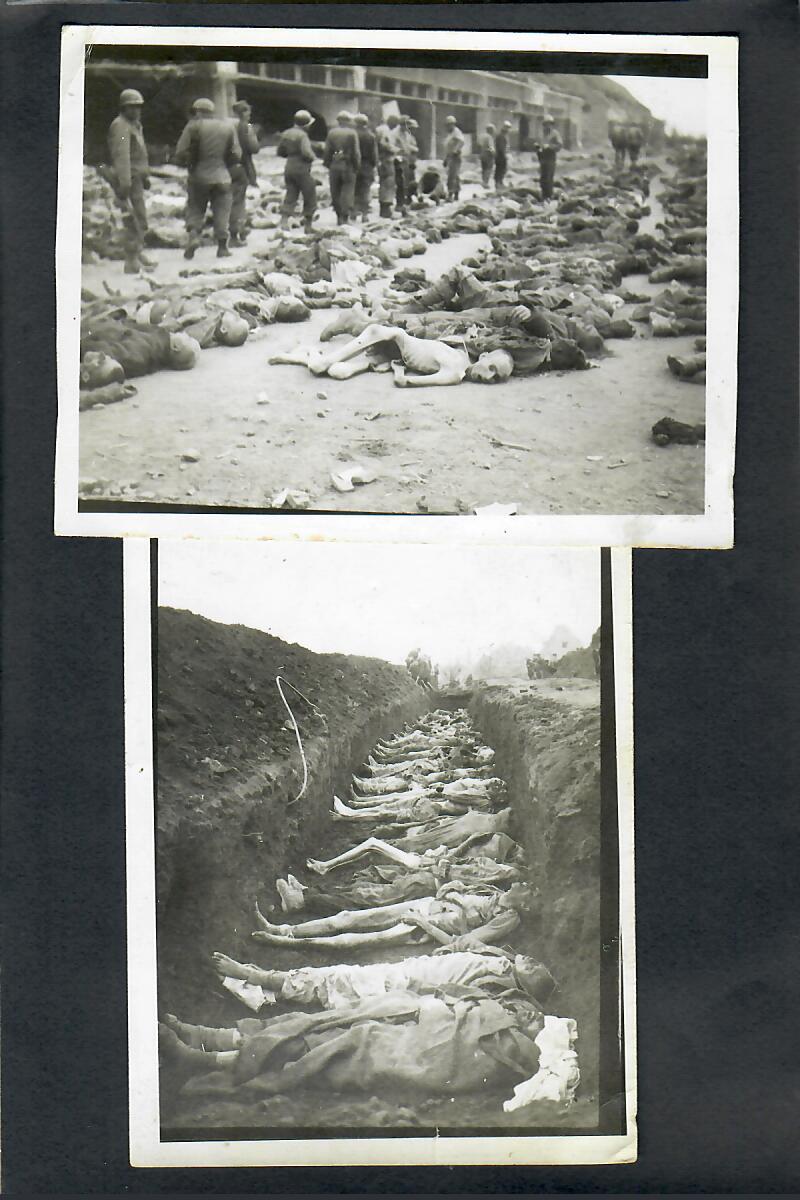
THIS IS WHAT GENOCIDE LOOKS LIKE

These two photographs of Jewish corpses are impossible to imagine happening to any living soul, let alone to look at.

And yet, as unbearable as these images are to witness, the horror of what these tortured men, women, and children must have endured can never be captured in a photograph.

My father-in-law, a Holocaust survivor, came to the United States in 1944, where he was soon drafted into the U.S. Army and bravely stormed the beaches of Normandy on D-Day.

Of the many photographs he took as he liberated concentration camps, these two stand proudly framed and on display in the lower level of our house for all to see every day.

Some might say the graphic images of piles of dead Jewish bodies, front and center, are too haunting, too brutal, too violent to sit out so casually, but we vehemently disagree.

The brutality these images evoke serves as a daily reminder to us of the despicable acts committed against innocent Jewish men, women, and children.

A daily reminder that the liberation and the end of World War II came too late for these massacred Jewish souls.

A daily reminder that we must remember and NEVER FORGET the Holocaust as the generation of Jewish survivors passes, because too soon they will no longer be alive to tell their stories firsthand.

And now, here is why I shared these powerful, soul-stirring photographs with you:

Invoking genocide, the Holocaust, Hitler, the Nazis, and the Gestapo to describe Gaza, Minnesota, Chicago, Republicans, ICE actions, or anyone who isn’t on the same page as you is unconscionable.

The Holocaust was a systematic genocide, not a metaphor for policies you oppose.

Your metaphorical nonsense is a reckless lie that distorts history and disrespects Holocaust survivors and their descendants, including my husband, the son of two survivors.

Comparing illegal immigrants to Anne Frank is despicable. It willfully ignores the obvious—that Anne Frank was not violating immigration laws. She was a legal citizen of Germany, and was hiding so as not to be murdered for the crime of being Jewish.

Anyone who dares to compare the heartbreaking events of Anne Frank’s short life is pathetically unprincipled and ignorant of historical facts.

I am confident, given the nonstop, moronic comparisons to the Holocaust by far too many of you, that you are fully capable of coming up with some other creative analogy than comparing illegal immigration enforcement to the state-sponsored persecution and murder of six million Jewish men, women, and children in Europe by the Nazi German regime with the assistance of its European allies and collaborators.

Drawing parallels between the fear of deportation for being in the United States illegally and the brutal slaughter of two out of every three Jews in Europe is reprehensible.

SHAME ON YOU.

You, who are so adept with words, should be able to criticize politics without exploiting or trivializing the unimaginable Jewish suffering and loss.

You have, at worst, willfully and at best, ignorantly cheapened a horrific time in history.

SO, TAKE A LONG, HARD LOOK AT THESE PHOTOGRAPHS, AND PLEASE STOP USING A JEWISH HISTORICAL TRAGEDY FOR PARTISAN GAIN.