Tag Archives: Caribou Maine

Blue Mind

Although it is said that water boosts “feel good” hormones, three unfortunate incidents forever changed my view of expansive bodies of water. And yet I am convinced that they benefit me psychologically and  physiologically.

In 1959, my life jacket got caught on a rope dangling from a swim raft on a lake in Caribou, Maine. Were it not for the actions of an observant young man watching from the shore; I might not be here to blog you this tale.

In 1967, while hanging out with friends on Nash’s Pond in Westport, Connecticut, we witnessed a ginormous snapping turtle crawling out of the dark murk. Proof that you never know what’s lurking in the water underneath your unsuspecting dangling feet.

The combination of its scary, dinosaur-like appearance and aggressive behavior towards us resulted in its untimely death at the hands of the youngest guy in our group. I’ve spent years horrified by the senseless murder of the turtle by impalement.

It was only yesterday that I read online that female snapping turtles travel on land to lay their eggs and (for good reason) are at their most aggressive. So in all probability, this jerk of a kid slaughtered a soon-to-be mommy.

And just to let you know, it was no surprise to me that this jerk of a kid turned out to be a plain old jerk as an adult.

In 1981 I was on a 27-foot sailboat that nearly capsized in a storm that came out of freaking nowhere. Weirdly enough, it not only changed my opinion about boating, it upended (or should I say ended) my relationship with the sailboat’s captain.

A lake, a pond, an ocean: three times was not a charm, so it came as no surprise to me that I should have an intense distrust of aquatic expanse.

I never venture into any large body of water, and yet I have this mystifying obsession with it. Mainly because I experience an otherworldly natural-high surge combined with a tranquil inducing meditative rush.

The feeling is so wonderfully intense that it’s on my bucket list to one day live on the ocean’s edge.

But most definitely in a high rise.

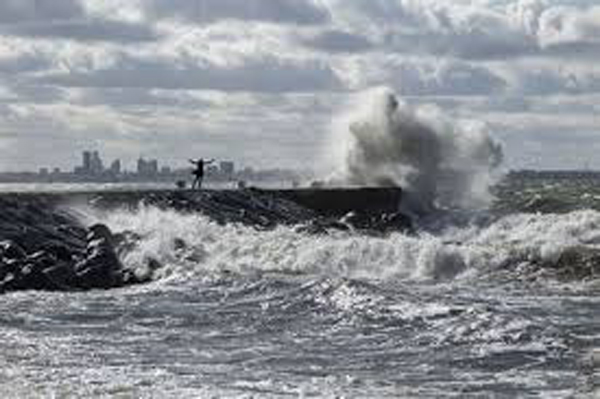
I fear all vast bodies of water, and yet they calm me. The spilling, plunging, surging, and pounding of the waves as they crash onto the shore causes my heart to race, and not in a good way, but I still crave it.

And the fear of the abyssal unknown catches me in bizarre and curious ways.

I can’t count the number of times I have covered my eyes while watching roiling and turbulent waves in movies, including in the film Frozen, when Anna and Elsa’s parents perish in a stormy sea. I force my grandkids to fast forward that scene every time!

And yet the sheer beauty, power, and sound of water go a long way to healing my heart. My go-to Alexa request when I can’t sleep is the crashing of waves. Go figure.

For me, spending time near water is as effective and way more immediate than any sedative. Even though it scares the living daylights out of me.

And nothing cures my writers’ block more than sitting waterside. Words, sentences, and entire paragraphs churn over and over in my head, mirroring the waves rolling and frothing close to me.

But not too close.

There is a theory called “blue mind,” which is a peaceful state of being people fall into when they are near, in, on, or under the water, resulting in being happier, healthier, more connected, and better at what they do.

I’ll agree that I feel a profound water-associated peace whenever I’m near an ocean, sea, river, or lake.

And I apologize for repeating myself, BUT, it is a rare day that you will find me in, on, or under any body of water.

Years ago, I self-diagnosed myself as having thalassophobia vs. aquaphobia because I’m not afraid of the water per se. It’s what’s lurking beneath its surface that freaks me out.

I’m obsessively drawn to the feel and sound of it. Just don’t put me in or on it.

And yet, the light reflecting off the water’s surface, the sound of the rising tide, and the spray of the sea on my face leaves me in a most peaceful state of mind.

I suppose it’s my mind full of blue.

And oh, if it were only possible to stay in a Blue-Mind forever.

Yesterday while anxiously waiting in a parking lot for a special someone who was having craniofacial surgery, the song Blue World by The Moody Blues came on the radio.

How I came to equate the song Blue World with the theory “Blue Mind” is beyond me.  Maybe it was the swirling and trilling in the beginning of the song that reminded me of undulating waves.

Or maybe it was the Moody Blues’ words of encouragement, emphasizing the importance of taking control of one’s life that “took control of me,” especially the phrase:

“It’s easier to stay than to turn around and run.”

Whatever it was and is, I was somehow able to connect the two blues.

And as hard as I tried, I haven’t been able to get that darn song out of my blue mind.

Blue World
by The Moody Blues

Heart and soul took control
Took control of me
Paid my dues, spread the news
Hands across the sea

Put me down, turned me round
Turned me ’round to see
Marble halls, open doors
Someone found the key

And it’s only what you do
That keeps coming back on you
And it’s only what you say
That can give yourself away

Underground sight and sound
Human symphony
Heard the voice, had no choice
Needed to be free

Fly me high, touch the sky
Left the earth below
Heard the line, saw the sign
Knew which way to go

’cause it’s easier to try
Than to prove it can’t be done
And it’s easier to stay
Than to turn around and run

It’s a blue world
It takes somebody to help somebody
Oh, it’s a blue world
It’s a new world
Click here for the Moody Blues Blue World Youtube video

In Search of My French Roots—and the Money Shot

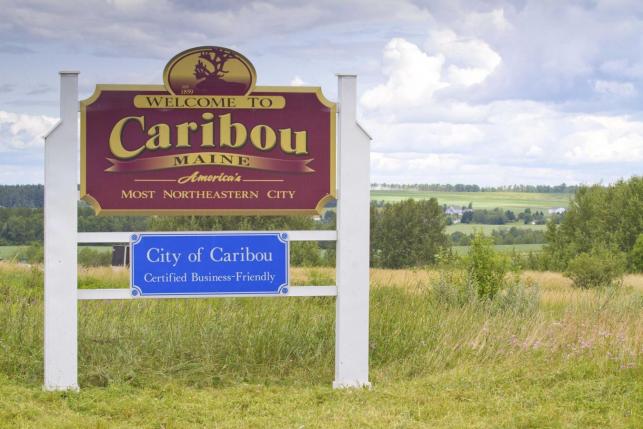
A sign welcoming visitors to Caribou, Maine is seen in this picture taken July 18, 2014. Citing amenities such as an airport and recreation center as evidence of excessive spending by the city government, a group of Caribou residents have started a movement to secede from the northeastern most U.S. City and undo a municipal merger which took place in the 19th century. REUTERS/Dave Sherwood
I have always dreamed of taking one more trip back to Caribou Maine where my maternal family hails from.

Caribou is the most northeastern city in the United States and a mere 10-12 miles from the province of New Brunswick in Canada. The estimated population in 2010 was 8,189.

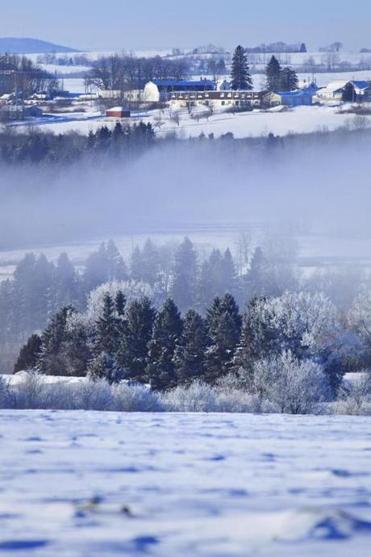
The summers in Caribou are spectacular but the winters are frigid. The cold comes from Quebec into the valley along the Aroostook River and doesn’t move out for at least four months, giving Caribou a winter climate on a par with North Dakota and Minnesota.

The average seasonal snowfall for Caribou is approximately 109 inches. The first freeze of the season usually occurs sometime in mid-September, and the last freeze around mid-May. So Caribou has about 130 days of freeze-free weather. In January, the average low is only 1 degree.

I have always fondly recalled the long driving trips I took to Caribou with my mother and grandmother both in summer and winter. My memories of those trips have faded over the years, but I can still vividly recall picking wild blueberries, raspberries, and strawberries by the bushel-full right off the side of the roads flanked on both sides by a tapestry of majestic emerald green potato fields in the summer.

Caribou Maine Potato Field

And in the winter, I will never forget how we would make fresh maple syrup from a spigot stuck in a tree, or ice skating, sledding, fretful drives on snow-covered roads, moose sightings, and snowmobiling. Caribou maintains over 170 miles of Aroostook County’s 1,600-mile groomed snowmobile trail systems—which have been rated the third-best in the nation.

caribou_25

But what will remain forever etched in my mind was that, winter or summer, Caribou had some of the most beautiful landscape I had ever seen, and a far cry from my poverty-stricken home base in Connecticut. I recall on so many lonely nights in our railroad apartment on Huron Street in Bridgeport, dreaming that Caribou was my home.

My grandmother was French-speaking and bilingual even though she hailed from the U.S. It didn’t matter whether you were on the American or Canadian side of the border at the time she grew up in Caribou, both French and English were spoken in the home. Her English was sometimes indecipherable, mainly because her enunciation of words as well as her accent were extremely thick. She called it the “Valley accent.” Anyone from the St. John Valley, whether it was the Maine or Canadian side, had a similar Franco-American accent.

For example, she would pronounce: the as “dah,” or three as “tree,” potato as “budayda,” mother as “mudder,” father as “fadder,” or the number 233 as “thoo turty tree.” To be honest, as a child who grew up hearing her speak both English and French, it was often easier for me to understand her French than her English.

I recall her telling me compelling stories about the Acadians’ arrival in the St. John River Valley, after being exiled from Canada, where many of the refugees had settled around 1755 to escape the British roundup, as well as her heartfelt memories of her life in and around Caribou. But I never wrote anything down nor did I pay much attention to the tales. How I wish I would have.

And my grandmother would sprinkle all of our conversations with sayings like, “The one you have, is worth more than the two you think you might get,” or “If the young knew and the old could,” or “After the storm comes good weather.” But her favorite saying was “plus ça change, plus c’est la même chose,” which means, “the more that changes, the more it’s the same thing.”

My grandmother also had several endearing pet names she would call me in French. Her favorite pet name for me was “Mon petit chou,” which means, “My little cabbage.” Now I really didn’t like being referred to as a gassy vegetable, but she said it with such fondness that I grew to love her quirky nickname for me. But my favorite pet name she called me was “Mon couer” which means, “My heart.” I was her heart, and she was mine.

It was my grandmother’s long life dream to someday move back to Maine, buy a small house and live out the rest of her life there. Unfortunately, the last time she was in Maine was with me—when I was about 7 or 8 years old.

It probably seems strange that someone who loved and dreamed of her home as much as she did, never returned for a visit. But it was a costly and time-consuming trip to make, and she never had the time off or the money to get back home. I often ask myself why I didn’t give her the money to go. I certainly could have. That question haunts me all the time.

In 1977, my grandmother sat me down to break the devastating news that she had been diagnosed with lung cancer. She was 58, and I was 24.

I was beyond words—dumbfounded, and afraid. But she wasn’t afraid of “the cancer” as she called it. She was afraid she wouldn’t make it back to her beloved Caribou. She asked me what I thought about her finally making the move back to her roots. She laid out a whole plan. She would drive over the steel bridge across the Aroostook River to Fort Fairfield Road in Caribou and take in the beauty of the rolling hills and fields where she grew up. She would go back to Eagle Lake, where she was born and then take the magnificent drive along the St. John River Valley to Van Buren. She’d buy a small house somewhere, and plant vegetables and fruit. She’d get back into canning and gardening, and maybe add a few chickens for fresh eggs.

I was agitated, but she was calm and rationalized that based on her diagnosis, she knew it was terminal and so it was finally time for her to make her move.

I was adamant that she stay in Connecticut. I convinced her not to go. I begged her not to leave me. And I pushed her to go through chemotherapy and radiation. And then I pushed her some more to have surgery to remove one of her lungs. I pushed and I pushed and I pushed.

I look back on all that now, and I realize how selfish I was. I should have encouraged her to live out her dream—the only dream she really ever had. She had such a difficult life, full of so many disappointments, with no possibility of a dream come true.

But I was in desperate need of her unconditional love, and her continuing presence. It was all about me.

What I should have done was to drive to Caribou with her, and help her find a place to live. I should have supported and assisted her in achieving the one and only dream she ever had.

Woulda, coulda, shoulda.

Needless to say, she never made it back to Caribou, or anywhere else. In 1983, six years after her cancer diagnosis, she lay dying in a hospital bed. She was distraught over her failing health, but she was more distressed about her decision not to move back to her cherished Caribou. “It’s not too late,” I reassured her, although we both knew it was a lie. She died that night.

Thirty-two years after her death, I decided to finally make the trip back to Caribou—for her. I did some research ahead of time, to make sure I visited and photographed all of the places she spoke so highly of, and that meant everything to her. Places like Grand Falls in New Brunswick, Eagle Lake, Presque Isle, Van Buren, and of course over the steel bridge and across the Aroostook River to Fort Fairfield Road in Caribou.

My first stop was in front of the Welcome to Caribou sign, where my husband took my photo. Unfortunately, the weather was rainy, cold, and disappointingly miserable.

My second stop was to Van Buren, along the St. John River Valley, where Maine is on one side of the narrow St. John River, and Canada on the other.

saint-john-river-valley

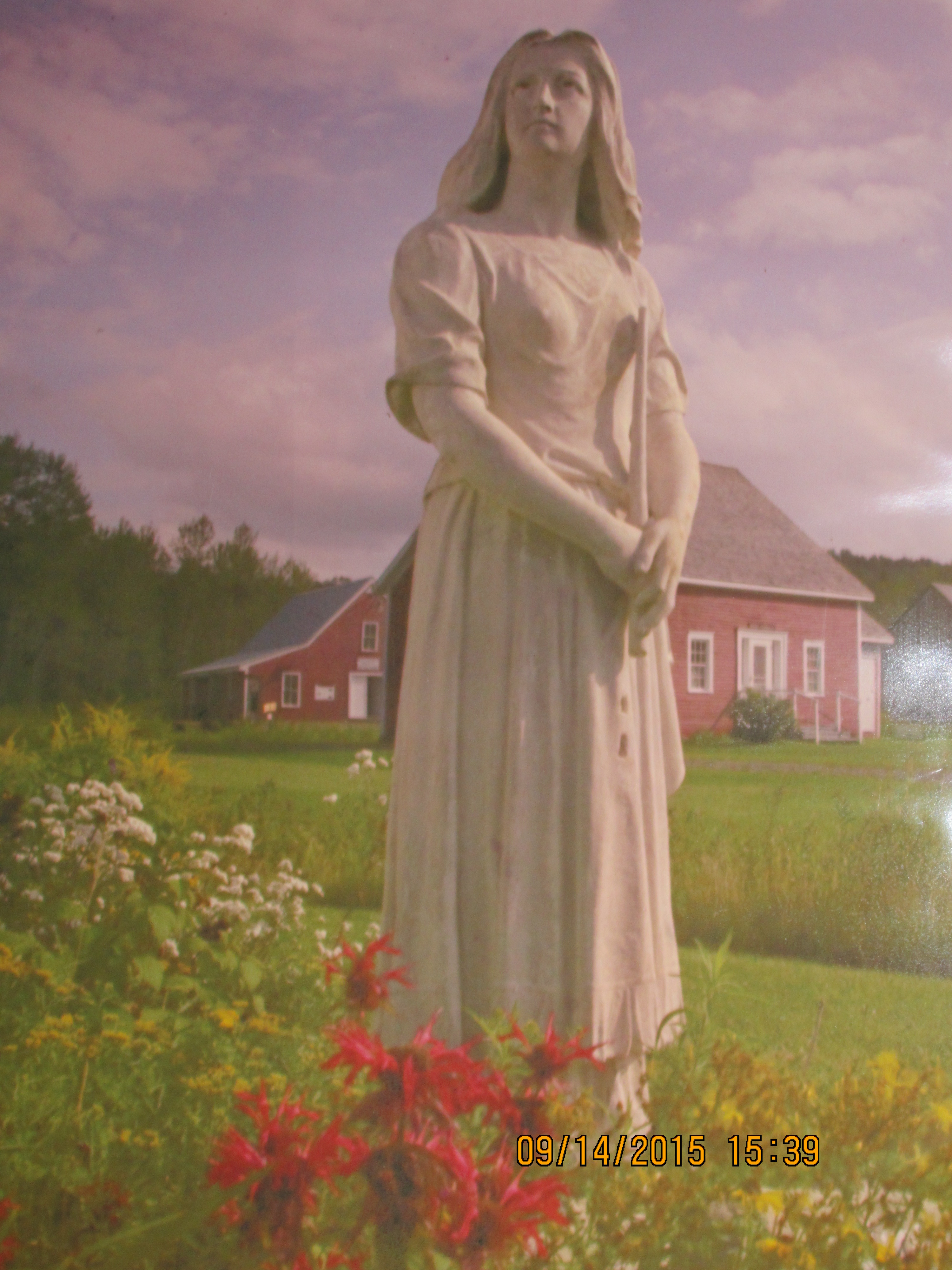
The Acadian culture still remains a significant part of everyday life in Van Buren, which is part of Aroostook County. At the Acadian Village there, I admired the ethereal 1,700-pound Italian marble statue of Evangeline, the lovesick Acadian refugee of Henry Wadsworth Longfellow’s poem about a couple parted by the British expulsion. His epic poem was published in 1847 and titled Evangeline: A Tale of Acadie. It was a work of fiction but based on historical fact. It was a story of a couple’s devotion, love, and ultimate separation on their wedding day, due to the deportation by the British, of the French Acadian people from Nova Scotia in 1755. Evangeline, the bride-to-be, wandered unsuccessfully for years in search of her one true love. As a result of his poem about Evangeline, Longfellow, who was born in Portland Maine, went on to become one of the most famous poets in America.

Acadian Village Evangeline 9-14-15

My third stop was to drive over the steel bridge to Fort Fairfield Road to see if it would spark a memory of where my great grandmother Julia Nadeau once lived. It was stormy and rainy, and there was a foggy mist obscuring the landscape. I wasn’t getting the money shot I had hoped for, that was for sure.

What struck me the most about its bewitchery was that fifty-plus years after the first time I laid eyes on it, the landscape had barely changed. It was still the same lush, endless fields and farms of emerald green I remembered as a child.

I had waited decades to stand at this very spot, drove over 600 miles, and wouldn’t be able to photograph it.

And then I realized that even if the day had been a spectacularly perfect one, no photo could have ever captured the panoramic, pristine beauty and serenity of the landscape before me. The one and only searing image of the money shot, would best and forever remain in the caverns of my mind. I had little regret because I knew that the beauteous view at the top of Fort Fairfield Road would stay with me for the rest of my life.

As I stood at the upper part of Fort Fairfield Road taking in the breathtaking spectacle of farm after farm, for as far as my eyes could see, I was overcome with an aura of peace and tranquility that I hadn’t felt in years.

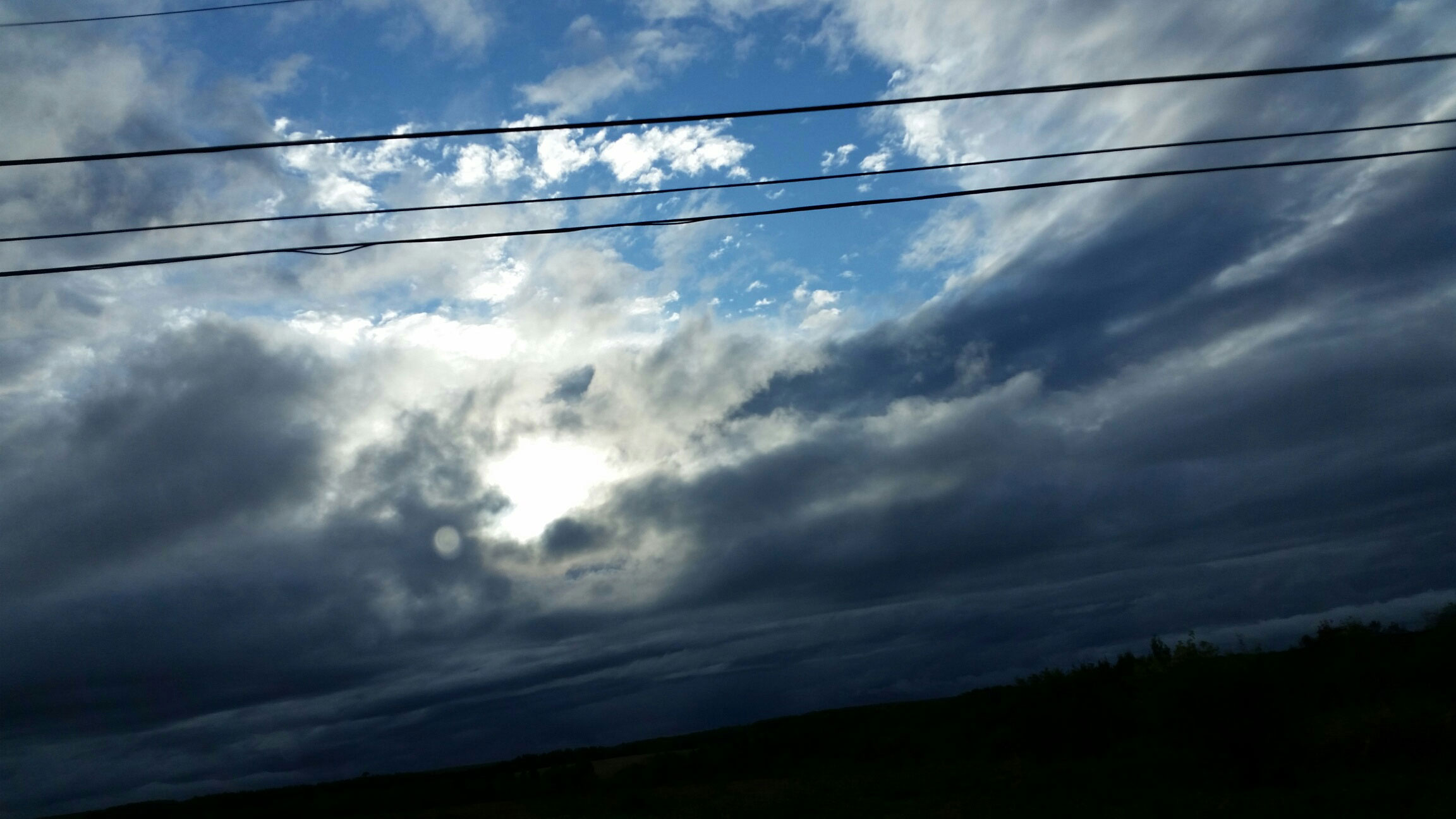
When I got back to the car to drive away, the skies opened up and the sun peeked out just slightly. I could swear it was my grandmother looking down at me and saying, “After the storm comes good weather.”

As my husband drove away, I took a picture of the sky with my cell phone, and then softly replied to my grandmother that we were home.

Mammy-Sun-The-Teri-Tome