Category Archives: Family & Relationships

BFF or Frenemy? When to Call It Quits

Best friends
I lost touch with my first best friend when I moved cities at age fourteen. The sudden loss of my then BFF broke my heart and I still think back on the devotion and love we shared and then lost, and sometimes wonder if our friendship would have lasted the test of time.

Since then, many besties have come and gone, for one reason or another. The old adage that we can’t choose our family but we can choose our friends is only true so long as we make the right choice.

And even though I’ve tried to choose my friends carefully, I have over the years developed less and less tolerance for those whom I once thought I picked well.

Making and keeping a BFF takes perseverance and there has to be mutual affection and respect for one another. An unwritten code of empathy, kindness, harmony, solidarity, support, and compassion combined with friendship etiquette is essential to a long-term alliance.

Anyone who has a BFF gets what I’m saying here.

Friendship etiquette is something that ensures the growth and tranquility essential for a healthy and reciprocally beneficial relationship. Friendship etiquette also means that there exists between two compadres an understanding, loyalty, and acceptance when there is not a shared like or interest in something or someone. You silently agree to stand behind and up for your BFF because that’s what a good friend does. You have their back whether you agree with them or not—in good times and especially in bad.

Additionally, friends don’t become your frenemy because your life might happen to be better than theirs at some moment in time. Friends take pride in the progress and success of their BFFs.

An actual friend will revel in your successes and knows when you’re in trouble. And they do what it takes to combat and control their possible jealousies and inner demons because we all have our insecurities.

True friends understand that even though they are BFF’s their lives are divergent and separate from each other. And they recognize that only through give-and-take respect can they secure an unforgettable and life-long attachment.

If you’ve ever had the honor of having a true BFF, it’s fairly easy to name the qualities you expect in a close friendship. And you go out of your way to be a legitimate and honest friend.

But is your BFF really for forever? The following questions should give you the answers you’re looking for.

Are they genuinely happy when something good happens to you?

Do they listen to your stories without changing the subject to something about them?

Do they give you a break when you’re clearly off your game, knowing that everyone has a bad day?

Do they cancel their plans to be with you in your hour of need?

Do they check in on you when the weather’s bad or just because?

Do they feel your sadness when something bad happens to you?

Do they accept your friends?

Do they say the negative things they feel about you to your face, and say only positive things about you behind your back?

If you’ve been a faithful friend or have a loyal sidekick, the answer to all of these questions should be yes. If not, maybe your BFF is not who you thought they were.

And jealousy is the quickest way to destroy a friendship. Let’s be honest, there will always be a friend out there with a better life than yours—a more successful job, a more luxurious home, in better shape, with a closer significant other. And maybe they’re more beautiful, handsome, or spontaneous.

But you say you love them, right? You want them to be happy, healthy, and prosperous, correct?

The wannabe BFFs say they love you, but the authentic BFF lives it. Because your friendship is worth safekeeping, and they know it’s the real deal and that a BFF once found, is irreplaceable.

Keep in mind that your BFF will always include others in their lives, which doesn’t mean that they stop being your best friend. A BFF needs to be confident enough to give their friendship shared freedom.

You’re friends for a reason. You chose each other because the two of you have something you don’t find often enough, if at all. You mutually share things like consideration, trust, empathy, support, and you love spending time with them. A BFF is a gift that can’t be measured like material goods.

Being a BFF means being truly ecstatic about your friends’ success and happiness even if you’re not up to the same speed. In every BFF, there is an element of responsibility to care about what your friend needs and take the lead sometimes. Your BFF is always on your mind, and you don’t play games.

It takes two to make a BF—there is no such thing as a one-sided friendship. A bona fide BFF is one of the best things that can happen to us. They listen to us, do things with us, and bring out the best in us. They make us better people, share new experiences, make us laugh, and are always there with broad shoulders for us to cry on in times of trouble. A BFF is considerate and your problems are their problems.

If your BFF is not like this, then, take a closer look at your friendship. Do they lack empathy and/or consideration of your feelings? Have they said and done things that have hurt you or caused offense? And when you try to explain to them that you are terribly hurt by what they’ve said or done, do they still play the victim?

If you’re always overlooking the bad behavior or demands of your supposed BFF, and/or walking on eggshells when you’re around them, it’s probably time to say goodbye.

As hard as that might be, take the energy and caring you’ve been wasting on your frenemy and find yourself the BFF you deserve.
alone-on-a-bench

In Search of My French Roots—and the Money Shot

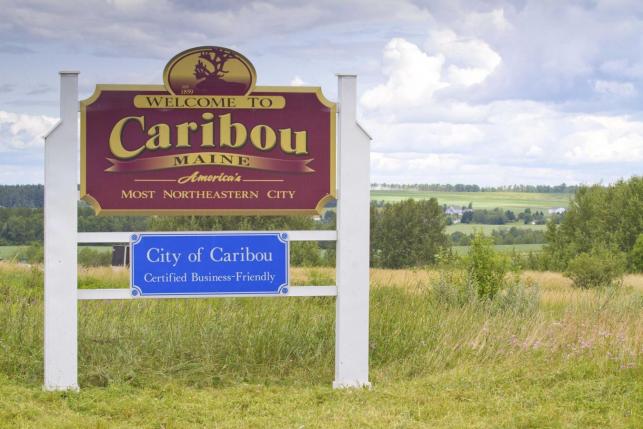
A sign welcoming visitors to Caribou, Maine is seen in this picture taken July 18, 2014. Citing amenities such as an airport and recreation center as evidence of excessive spending by the city government, a group of Caribou residents have started a movement to secede from the northeastern most U.S. City and undo a municipal merger which took place in the 19th century. REUTERS/Dave Sherwood
I have always dreamed of taking one more trip back to Caribou Maine where my maternal family hails from.

Caribou is the most northeastern city in the United States and a mere 10-12 miles from the province of New Brunswick in Canada. The estimated population in 2010 was 8,189.

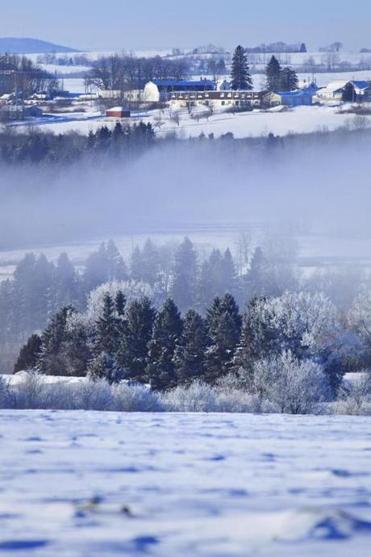
The summers in Caribou are spectacular but the winters are frigid. The cold comes from Quebec into the valley along the Aroostook River and doesn’t move out for at least four months, giving Caribou a winter climate on a par with North Dakota and Minnesota.

The average seasonal snowfall for Caribou is approximately 109 inches. The first freeze of the season usually occurs sometime in mid-September, and the last freeze around mid-May. So Caribou has about 130 days of freeze-free weather. In January, the average low is only 1 degree.

I have always fondly recalled the long driving trips I took to Caribou with my mother and grandmother both in summer and winter. My memories of those trips have faded over the years, but I can still vividly recall picking wild blueberries, raspberries, and strawberries by the bushel-full right off the side of the roads flanked on both sides by a tapestry of majestic emerald green potato fields in the summer.

Caribou Maine Potato Field

And in the winter, I will never forget how we would make fresh maple syrup from a spigot stuck in a tree, or ice skating, sledding, fretful drives on snow-covered roads, moose sightings, and snowmobiling. Caribou maintains over 170 miles of Aroostook County’s 1,600-mile groomed snowmobile trail systems—which have been rated the third-best in the nation.

caribou_25

But what will remain forever etched in my mind was that, winter or summer, Caribou had some of the most beautiful landscape I had ever seen, and a far cry from my poverty-stricken home base in Connecticut. I recall on so many lonely nights in our railroad apartment on Huron Street in Bridgeport, dreaming that Caribou was my home.

My grandmother was French-speaking and bilingual even though she hailed from the U.S. It didn’t matter whether you were on the American or Canadian side of the border at the time she grew up in Caribou, both French and English were spoken in the home. Her English was sometimes indecipherable, mainly because her enunciation of words as well as her accent were extremely thick. She called it the “Valley accent.” Anyone from the St. John Valley, whether it was the Maine or Canadian side, had a similar Franco-American accent.

For example, she would pronounce: the as “dah,” or three as “tree,” potato as “budayda,” mother as “mudder,” father as “fadder,” or the number 233 as “thoo turty tree.” To be honest, as a child who grew up hearing her speak both English and French, it was often easier for me to understand her French than her English.

I recall her telling me compelling stories about the Acadians’ arrival in the St. John River Valley, after being exiled from Canada, where many of the refugees had settled around 1755 to escape the British roundup, as well as her heartfelt memories of her life in and around Caribou. But I never wrote anything down nor did I pay much attention to the tales. How I wish I would have.

And my grandmother would sprinkle all of our conversations with sayings like, “The one you have, is worth more than the two you think you might get,” or “If the young knew and the old could,” or “After the storm comes good weather.” But her favorite saying was “plus ça change, plus c’est la même chose,” which means, “the more that changes, the more it’s the same thing.”

My grandmother also had several endearing pet names she would call me in French. Her favorite pet name for me was “Mon petit chou,” which means, “My little cabbage.” Now I really didn’t like being referred to as a gassy vegetable, but she said it with such fondness that I grew to love her quirky nickname for me. But my favorite pet name she called me was “Mon couer” which means, “My heart.” I was her heart, and she was mine.

It was my grandmother’s long life dream to someday move back to Maine, buy a small house and live out the rest of her life there. Unfortunately, the last time she was in Maine was with me—when I was about 7 or 8 years old.

It probably seems strange that someone who loved and dreamed of her home as much as she did, never returned for a visit. But it was a costly and time-consuming trip to make, and she never had the time off or the money to get back home. I often ask myself why I didn’t give her the money to go. I certainly could have. That question haunts me all the time.

In 1977, my grandmother sat me down to break the devastating news that she had been diagnosed with lung cancer. She was 58, and I was 24.

I was beyond words—dumbfounded, and afraid. But she wasn’t afraid of “the cancer” as she called it. She was afraid she wouldn’t make it back to her beloved Caribou. She asked me what I thought about her finally making the move back to her roots. She laid out a whole plan. She would drive over the steel bridge across the Aroostook River to Fort Fairfield Road in Caribou and take in the beauty of the rolling hills and fields where she grew up. She would go back to Eagle Lake, where she was born and then take the magnificent drive along the St. John River Valley to Van Buren. She’d buy a small house somewhere, and plant vegetables and fruit. She’d get back into canning and gardening, and maybe add a few chickens for fresh eggs.

I was agitated, but she was calm and rationalized that based on her diagnosis, she knew it was terminal and so it was finally time for her to make her move.

I was adamant that she stay in Connecticut. I convinced her not to go. I begged her not to leave me. And I pushed her to go through chemotherapy and radiation. And then I pushed her some more to have surgery to remove one of her lungs. I pushed and I pushed and I pushed.

I look back on all that now, and I realize how selfish I was. I should have encouraged her to live out her dream—the only dream she really ever had. She had such a difficult life, full of so many disappointments, with no possibility of a dream come true.

But I was in desperate need of her unconditional love, and her continuing presence. It was all about me.

What I should have done was to drive to Caribou with her, and help her find a place to live. I should have supported and assisted her in achieving the one and only dream she ever had.

Woulda, coulda, shoulda.

Needless to say, she never made it back to Caribou, or anywhere else. In 1983, six years after her cancer diagnosis, she lay dying in a hospital bed. She was distraught over her failing health, but she was more distressed about her decision not to move back to her cherished Caribou. “It’s not too late,” I reassured her, although we both knew it was a lie. She died that night.

Thirty-two years after her death, I decided to finally make the trip back to Caribou—for her. I did some research ahead of time, to make sure I visited and photographed all of the places she spoke so highly of, and that meant everything to her. Places like Grand Falls in New Brunswick, Eagle Lake, Presque Isle, Van Buren, and of course over the steel bridge and across the Aroostook River to Fort Fairfield Road in Caribou.

My first stop was in front of the Welcome to Caribou sign, where my husband took my photo. Unfortunately, the weather was rainy, cold, and disappointingly miserable.

My second stop was to Van Buren, along the St. John River Valley, where Maine is on one side of the narrow St. John River, and Canada on the other.

saint-john-river-valley

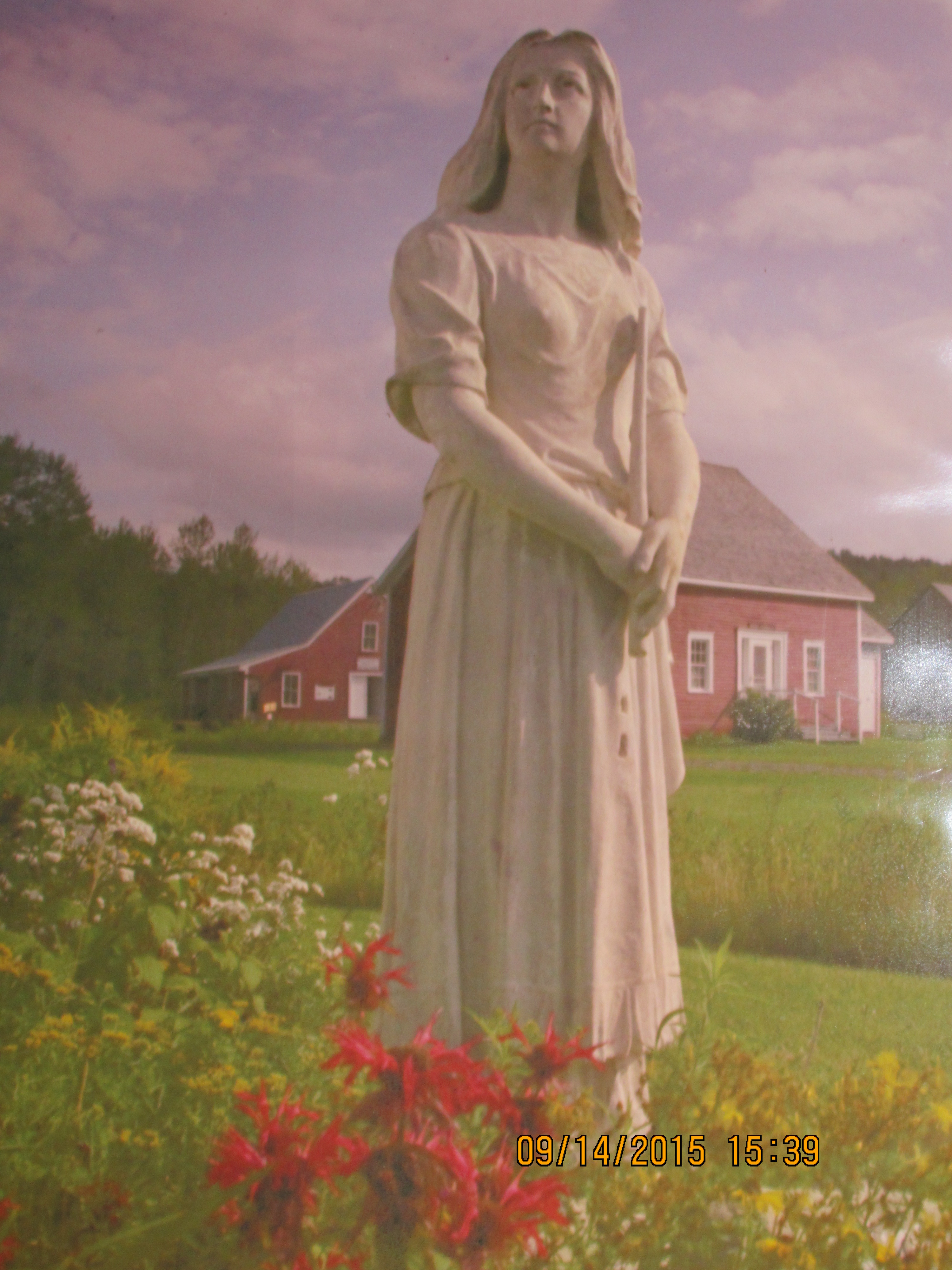
The Acadian culture still remains a significant part of everyday life in Van Buren, which is part of Aroostook County. At the Acadian Village there, I admired the ethereal 1,700-pound Italian marble statue of Evangeline, the lovesick Acadian refugee of Henry Wadsworth Longfellow’s poem about a couple parted by the British expulsion. His epic poem was published in 1847 and titled Evangeline: A Tale of Acadie. It was a work of fiction but based on historical fact. It was a story of a couple’s devotion, love, and ultimate separation on their wedding day, due to the deportation by the British, of the French Acadian people from Nova Scotia in 1755. Evangeline, the bride-to-be, wandered unsuccessfully for years in search of her one true love. As a result of his poem about Evangeline, Longfellow, who was born in Portland Maine, went on to become one of the most famous poets in America.

Acadian Village Evangeline 9-14-15

My third stop was to drive over the steel bridge to Fort Fairfield Road to see if it would spark a memory of where my great grandmother Julia Nadeau once lived. It was stormy and rainy, and there was a foggy mist obscuring the landscape. I wasn’t getting the money shot I had hoped for, that was for sure.

What struck me the most about its bewitchery was that fifty-plus years after the first time I laid eyes on it, the landscape had barely changed. It was still the same lush, endless fields and farms of emerald green I remembered as a child.

I had waited decades to stand at this very spot, drove over 600 miles, and wouldn’t be able to photograph it.

And then I realized that even if the day had been a spectacularly perfect one, no photo could have ever captured the panoramic, pristine beauty and serenity of the landscape before me. The one and only searing image of the money shot, would best and forever remain in the caverns of my mind. I had little regret because I knew that the beauteous view at the top of Fort Fairfield Road would stay with me for the rest of my life.

As I stood at the upper part of Fort Fairfield Road taking in the breathtaking spectacle of farm after farm, for as far as my eyes could see, I was overcome with an aura of peace and tranquility that I hadn’t felt in years.

When I got back to the car to drive away, the skies opened up and the sun peeked out just slightly. I could swear it was my grandmother looking down at me and saying, “After the storm comes good weather.”

As my husband drove away, I took a picture of the sky with my cell phone, and then softly replied to my grandmother that we were home.

Mammy-Sun-The-Teri-Tome

My Grandmother’s Gift

Patchwork Quilt

While cleaning out my attic many years ago, I found a dusty old box marked “special.” It looked like my handwriting, but a much younger redaction. I opened the carton with genuine excitement, having literally forgotten the contents it held.

It was a patchwork quilt, a birthday gift from my grandmother on my twenty-first birthday. There was a card in the box, with an image of a beautiful yellow rose.  I opened the card and the sadness I felt took my breath away.  I couldn’t bear to read her words and closed my tear filled eyes, and tried to remember her, as she was that day.

The memory was so loud, I could actually hear the excitement in her voice as she chattered on in her thick French accent, while I ripped apart the meticulously wrapped package. I could almost smell the sweet aroma of the fresh baked cookies she was making for me that day.

My beloved grandmother, my surrogate mother, was a seamstress. And although we had very little money, I always wore gorgeous and elegant clothes.  We would pour through the pages of the latest fashion magazines and together picked out the most beautiful designs. “This is made for you,” she would proudly exclaim, tearing page after page out of the magazines.  She needed no pattern—every measurement of my body had been devotedly memorized in inches and yards.

She had a job boxing bullets on an assembly line all day—but at night, while others were sleeping, there she was, hunched over her sewing machine, working feverishly to complete something special for me—a dress, coat, suit. Her way of saying “I love you.”

The memories, in flashing snapshots kept coming—one after the other. The sound of her sewing machine, and the gentle humming of her favorite tune. The puppy we picked out when I was five. The clownish self-portrait I painted for her, that she hung so proudly over her bed. The multi-colored sweater coat, I still wear to this day. Her mother’s treasured cameo pin, worn near and dear to my heart. Her fear as she lay dying in my arms.

And now, better late than never, the flashback of the day she proudly presented me with my birthday gift. I struggled to recall my younger self, opening the beautiful card with the single yellow rose and reading the message inside. “A patchwork quilt for your 21 years,” it said.

The quilt was truly magnificent. Handcrafted, full of vibrant colors, large enough for a king size bed.  And yes, I recollected thinking that while I thought it was beautiful, I was slightly disappointed in her choice of gifts. At twenty-one, I was moving around a lot and didn’t even have a bed large enough for this patchwork of remnant material.

Remnant material?

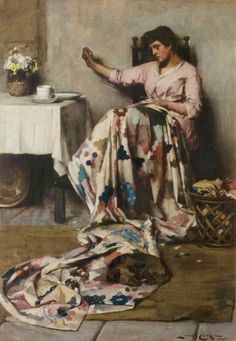
A sharp pain spread across the center of my chest. I frantically pulled the quilt from the musty, old box, laid it on the floor, and caressed the hundreds of squares of material lovingly.  Why, this was no patchwork quilt of remnant material.  This was a pastiche of every dress, suit and article of clothing my grandmother had so laboriously made for me during my first twenty-one years.

A patchwork quilt of me.

The red dotted swiss I wore at a surprise party for my ninth birthday, the hunter green velvet I wore for my sweet sixteen, the lavender satin from my prom dress, the yellow silk jacquard worn on my first job interview.

Overwhelmed, I wrapped myself with her labor of love and cocooned myself in the yards of memories, shivering from the realization of what I had just discovered.

How could I have missed her sentimental intention? How shallow had I been, to think this patchwork of my life was merely remnants of old material?

I cried then for the lost opportunity to embrace her tightly and to express my reverential sense of gratitude to her for preserving my life in this way.

As my tears stained my grandmother’s masterpiece, I spoke out loud, apologizing to my selfless and lonely grandmother for all the time lost, asking her forgiveness for not understanding or appreciating the powerfulness of my heirloom.

Swaddled in my precious gift, still clinging to my birthday card, I was consumed by the heart-wrenching memories that are but a patchwork quilt now.


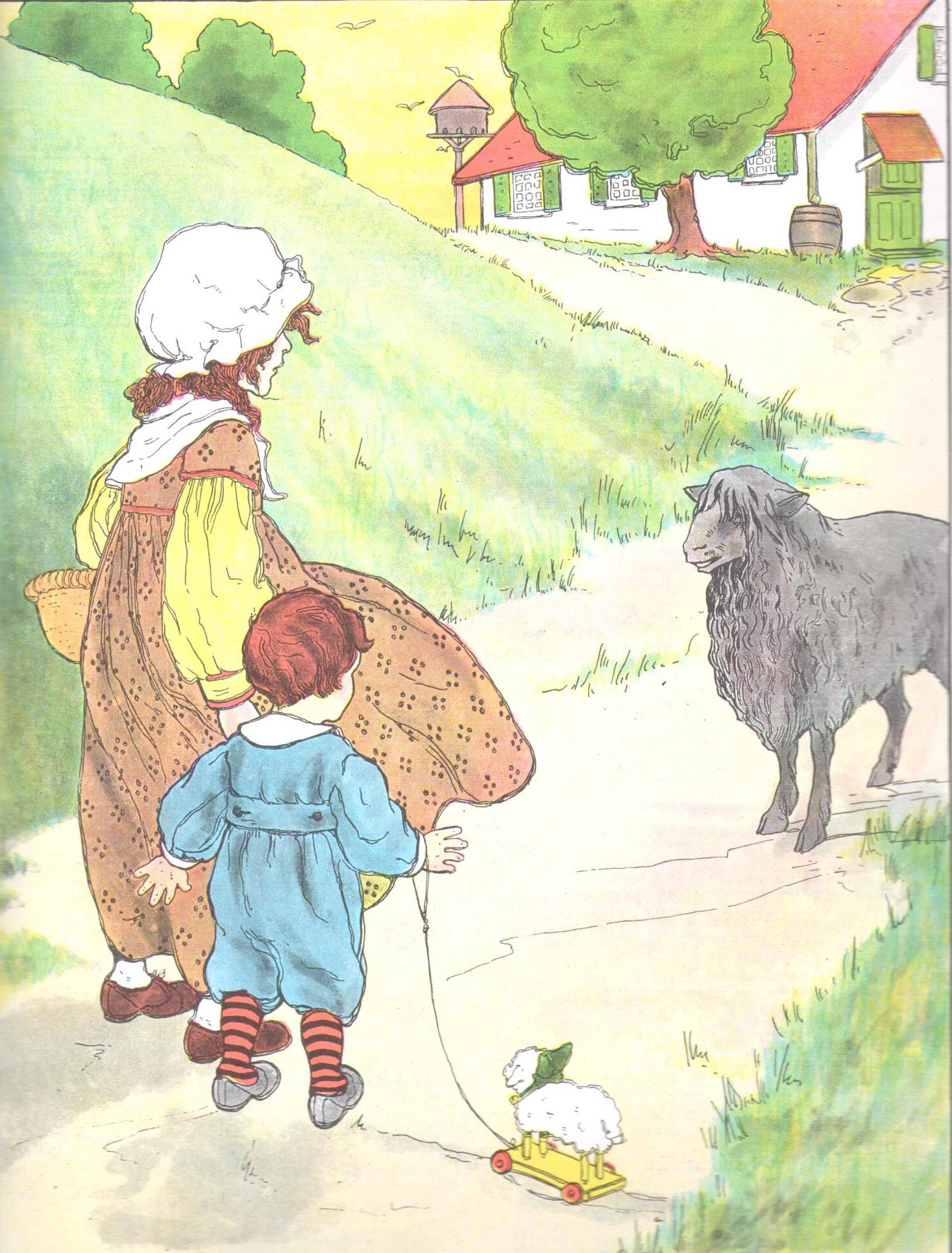
Baa Baa Black Sheep

Black Sheep
Out to dinner with a friend a few weeks ago, she gloomily confided in me that she was the “black sheep” of her family. Her sorrowful declaration raised the hair on my arms and gave me the chilly willies for two reasons:

1. She is beautiful, successful, generous, compassionate, considerate, well-grounded, strong, selfless, and a loving and nurturing mother and wife. The type of woman that anyone would aspire to be.

2. Over the years, I’ve heard this expression more often than I would like to admit. And worse, I’ve heard it used to refer to me. Many times. So many times, that I developed “Black Sheep Syndrome,” if there is such a thing.

So the two of us bitterly asked each other what I have been asking myself for close to fifty years:

Why and how does a child become the black sheep of their family?

When I got home from dinner that night, I looked up the Baa Baa Black Sheep nursery rhyme. Baa Baa Black Sheep is an English poem, dating back to sometime around 1731. But very little is actually known about its origins. While I found several interpretations of the words, there was little to no evidence to support any of them.

I also found several variations of the rhyme, although the one that I prefer is the Mother Goose Melody published sometime in 1765. This version is usually sung to the tune of “Twinkle Twinkle Little Star,” and the “Alphabet Song.” The last couplet is printed as “But none for the little boy who cries in the lane,” as opposed to “One for the little boy who lives down the lane.”

Mother Goose’s version:

Baa, baa, black sheep,
Have you any wool?
Yes, marry, have I,
Three bags full;
One for my master,
One for my dame,
But none for the little boy
Who cries in the lane.

A common interpretation is that the rhyme was against Medieval English taxes on the wool industry.

But I don’t really understand the black sheep part. It doesn’t take a genius to know that white wool is more desirable in the commercial marketplace because it can be dyed any color. Black sheep in a flock, are useless in terms of wool production as it is impossible to dye its fleece. A fleece with even a few black fibers is considered less than desirable.

So if the wool from a black sheep is impossible to dye, rendering it useless, and undesirable, it would be unsaleable, thus no need to tax it at all.

Whatever the reason the rhyme depicts black instead of white, it’s obvious that the undesirable and uselessness of the black sheep is what gives us the term “the black sheep of the family.”

And okay, I can see a sheep farmer who makes a living from wool, considering the black sheep a wastrel. But a family?

Black sheep is a phrase used to describe a pariah, a reject, and a ne’er-do-well, especially within a family unit. Someone who is ostracized and treated differently from the rest. A distasteful outcast, who just doesn’t belong.

Nothing for the little boy who cries in the lane.

Yes, I’m called the black sheep in my family. And I’m finally proud of it.

There I said it. And the best realization and revelation for me is that I actually do feel pride.

And here is my take on the whole “black sheep” defamation:

The family black sheep don’t get picked randomly or by accident. The black sheep are sensitive, unhappy, vulnerable, and usually the outspoken child. The one who refuses to stay silent and just can’t and won’t pretend to be one big happy family.

The designated black sheep is made to carry the hidden blame and shame of relatives who refuse to acknowledge their own flaws and weaknesses.

Toxic and dysfunctional family members tend to project their own jealousies and sense of inferiority onto the shunned and disfavored black sheep.

And even if the black sheep eventually leaves (or is thrown out of) the familial flock, it doesn’t end there. The hated black sheep is more than likely still considered the cause and reason for the family’s difficulties and unhappiness, no matter how much time has passed.

Because the family’s need to place blame and project shame onto the black sheep is the only way, they can live with themselves.
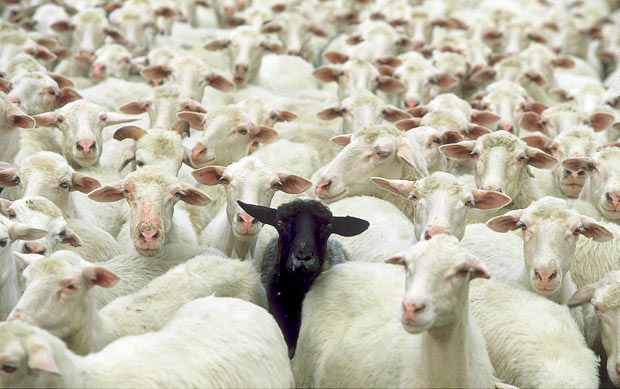
Black Sheep Nursery Photo Cropped