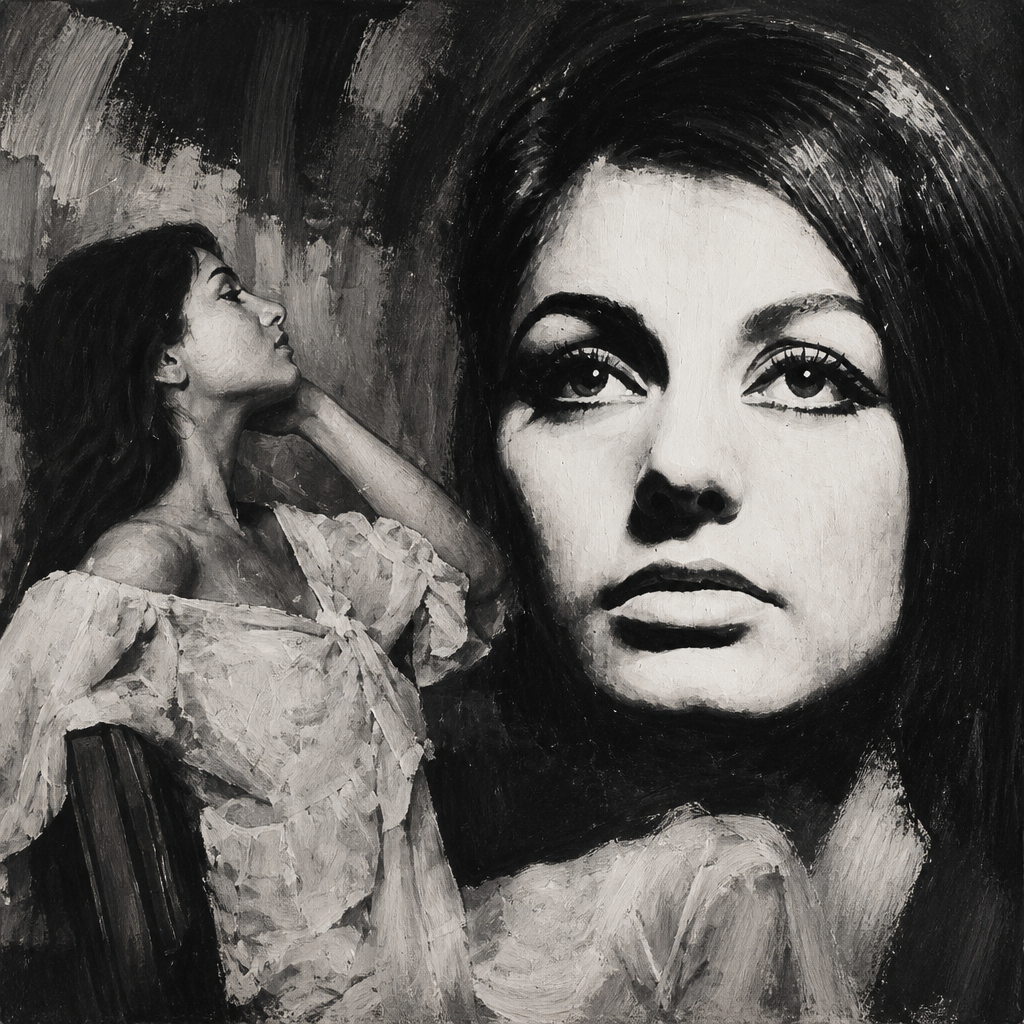
Parastoo Ahmadi (Left) and Googoosh (Right)
Iranian singer Parastoo Ahmadi was sentenced to 74 lashes for livestreaming an online concert without wearing a hijab. The severe ruling underscores ongoing restrictions on artistic expression and women’s rights in Iran.
The date of Ahmadi’s lashing, mandated by the Morality Police, has not been officially announced because her sentence is under appeal, though it is unlikely to be reversed.
The sentence, handed down on June 18, 2026, stems from a December 2024 livestream concert on Ahmadi’s YouTube channel. The 29-year-old Ahmadi sang a patriotic anthem without wearing a hijab, a practice banned under Iran’s strict laws.
In addition to the flogging, Ahmadi faces a two-year ban on leaving the country and a two-year ban on engaging in any artistic activities.
Fatemeh Shams, a professor of Persian Literature at the University of Pennsylvania, wrote on X: “Peace is not merely the silencing of missile sounds or the subsiding of bombardment flames. Peace finds meaning only when the bodies of women and innocent protesters are no longer fields for unrestrained violence; when whips, torture, and nooses are no longer tools of governance. True and lasting peace becomes possible only when no woman is branded a criminal for working, studying, singing, or choosing her own lifestyle; and when no innocent human is consigned to dark prison cells and gallows for the crime of protesting, demanding justice, or expressing an opinion.”
The Iranian-British actor Nazanin Boniadi said: “The sentencing of singer Parastoo Ahmadi to flogging for the simple act of singing publicly without a hijab is a stark reminder that, despite talk in Washington of a ‘new regime’ in Iran, the Islamic Republic’s machinery of repression remains unchanged.”
The Iranian actor Setareh Maleki, who was forced into exile after starring in Mohammad Rasoulof’s Oscar-nominated film The Seed of the Sacred Fig, said: “When I watched the video of Parastoo Ahmadi’s concert, it reignited the spirit of resistance in me. For days, I kept watching the videos over and over again, and I felt immensely proud of Parastoo.”
Since the 1979 Islamic Revolution, male singers face heavy censorship and must obtain official permits for public performances, while women have been prohibited from singing solo for mixed-gender audiences in public. Women are permitted to sing only in groups or choirs, or for female-only audiences. Singers must have their lyrics and music approved by the Ministry of Culture and Islamic Guidance, and the censorship and licensing process in Iran is highly stringent.
The sentencing of Ahmadi brought back memories of Googoosh, an Iranian Azerbaijani singer and actress who was wildly popular in the 1960s and 1970s.
Googoosh, a Turkish name meaning “Swan Bird,” was as famous in Iran as Elvis was in the United States.
Her music ranged from upbeat pop to emotional ballads, and she was often compared to Édith Piaf. Googoosh also starred in more than 25 movies, including the most commercially successful Iranian film of all time.
Then came the Iranian Revolution in 1979, which forever changed her life. During that time, 29-year-old Googoosh fled Iran and settled in Los Angeles.
For personal reasons, a few months later she returned to Tehran despite warnings that the incoming extremist regime would likely imprison or execute her. Upon her return, the new theocratic government arrested her, barred her from singing or performing, banned her music and movies, stripped her of her passport, and imposed a 21-year state-enforced silence on her.
During Mohammad Khatami’s presidency, after her 21-year sentence, she was somehow allowed to tour outside Iran. The Googoosh Comeback Tour was a series of concerts that began in July 2000, when she was 50 years old.
When I was the Publisher of World Press Review Magazine, I was offered press tickets to her historic sold-out New York concert at Madison Square Garden on August 26, 2000.
The concert scene was surreal as Googoosh was greeted by more than ten thousand cheering fans, many of them Iranian refugees who had last heard her sing in pre-revolutionary Iran and were openly weeping.
Googoosh has lived in exile and toured ever since, dedicating her life to keeping Iranian culture and music alive for audiences worldwide.
Oh, if only this was an option for Parastoo Ahmadi.