I wrote this blog post weeks ago, but I go back and forth about whether it should ever see the light of day.
Not just because of the rarely discussed, mostly unspeakable topic of ostomy bags, but also because this post reads more like a medical manifesto than a blog post. At eighteen pages and 6,880 words, it’s a dreadfully long manifesto, to boot.
As an aside, I was superstitiously content to have written eighteen pages, mostly because in Hebrew the number 18 is symbolically linked to the word “chai,” meaning “life,” due to its ancient Gematria value. And mostly because while this post is about almost dying, it’s also about living.
And since this post is interminably long, I tried to set it up “CliffsNotes” style by breaking it into sections labeled in 18 POINT CAPS. This way, if you have zero interest in my hospital daze and its unfortunate (or fortunate) outcome, you can skim through the gist of the gore without slogging through too much of the nitty-gritty.
As I sit at my computer, staring at my finished post, I’m downright petrified to hit “PUBLISH.”
Writing about my sigmoid colon removal and ileostomy procedure exposes me to likely head-scratching and definite judgmental feedback, i.e., TMI to the max.
But I’d like to think I’m breaking through a deeply rooted societal taboo surrounding the vital organ I fight every day to save and the bodily function we all rely on to survive.
I’ve unabashedly written about unspeakable topics before, and I’ve crossed societal boundaries more times than I probably should have.
Truth be told, I’ve always felt a quiet power in speaking out despite my fear, largely because, as a young girl, I stayed silent for far too long.
So why should this experience be any different? Why not cross societal boundaries yet again?
To date, I’ve endured 87 days of crushing depression, believing I couldn’t survive another day, even though I know that without my surgeries I wouldn’t have survived at all.
If I ultimately decide to post this blog about my new “normal,” I doubt many of my readers will have the patience or interest to read it through to THE END.
But if I can reach even one person who’s struggling with what I’ve been through and do so with a modicum of humor, I’ve done my blogger job. Solidarity can often transform personal suffering into collective resilience and strength, so I will now take you into my medical abyss:
MY BFF: My dearest high school friend flew from Texas to New York on Thursday, August 13, for our 55th High School Weekend Reunion in Westport, Connecticut.
As soon as Nancy arrived, we morphed back into teenagers, reminiscing and giggling through the late afternoon. We dined oceanfront, then strolled the Long Beach boardwalk for miles, talking about our dreams, triumphs, and yes, even our heartbreaks, as the ocean breeze wafted around us. I felt invigorated, invincible, and safe.
We came back to my house and sat on my deck into the wee hours of Friday morning, laughing about nothing and everything, like the good old days. And we hysterically battled a ginormous dragonfly that had made its way into my kitchen.
I was beyond panicky, while Nancy was calm, composed, unbothered, and Texas tough. MY BFF, a girly yet rough-and-tumble, fearless Texan, saved me from a sleepless night in New York while simultaneously saving a very agitated dragonfly!
Nancy was convinced the helicopter-sized dragonfly was fleeing the clutches of an escaped Black-throated Magpie-Jay we heard cawing way too close to us during our long but very fun evening. This Jay-bird was ginormous. It was loud and intimidating, and only the next morning, when I saw it hanging around my deck, did I take a photo (from a very long distance away) to figure out what the hell this monster bird was.

Spending girl time with MY BFF from Thursday into early Friday morning was perfection.
Until it wasn’t.
THE HOSPITAL: An hour before it was time to hit the road for Connecticut, I collapsed in excruciating pain and instantly knew something was terribly wrong.
Wrong in a way that terrified me.
When the ambulance arrived at my house, I recall feeling only two things: 1) I had let Nancy down, and 2) THE HOSPITAL I was being transported to was notorious for low patient satisfaction, an impersonal or rude bedside manner among certain nurses and support staff, and long emergency room wait times. (Although I later learned the facility earned an “A” safety grade in Spring 2026, indicating a very low rate of infection-related complications compared with the national average, AND that my appointed emergency surgeon was a wunderkind.)
Once at THE HOSPITAL, the emergency room wait time was excruciatingly long as I screamed through the worst pain I had ever experienced. I had also never seen MY HUSBAND so pale and so frightened, and it scared the bejesus out of me.
As I fought through the pain of those slow-motion moments, it dawned on me that I was also fighting for my life.
Eventually, I had a CAT scan, which showed that I had perforated my colon and that bile and a poisonous abscess the size of an apple were invading all of my other organs, attempting to kill them and me.
A colon and rectal surgeon, flanked by his surgical team, soon advised me that I would need emergency surgery to remove my sigmoid colon and an additional procedure called an ileostomy, which brings the end of the small intestine through an opening in the abdominal wall so that digestive waste exits the body into an external pouch.
I was devastated.
Over the next three weeks in THE HOSPITAL, my life was held hostage by fear, pain, business-as-usual apathy, dehumanizing circumstances, and a roommate with hordes of visitors (too many sleeping overnight every night).
And I would be remiss not to include the begging for ice chips that rarely arrived, the “vitalists” who came every two hours, 24/7, to take my blood pressure and temperature; the race to the bathroom while dragging the sky-high, very heavy IV pole; the sickening perfumes and colognes worn by the hospital staff, drifting in and out of my room day and night; the early-morning blood-drawers (phlebotomists); the IV teams; and the ostomy bag expert.
NOTE: RULES SHOULD BE SET IN PLACE TO BAN HOSPITAL STAFF FROM WEARING COLOGNE, PERFUME, OR ANY OTHER TYPE OF FRAGRANCE. DUH. PERIOD.
My ONLY saving grace during this three-ring medical circus was my precious pen and paper, used solely to document the written record herein.
THE BED: I lay flat on my back for so many weeks that my entire body ached and I had begun to develop painful bed sores. I tried to elevate THE BED, which was covered in heavy, dark-blue, tarp-like plastic, several times. But every time I elevated it, the bulletproof vinyl creased in all the wrong places, adding to my body-aching, blistery misery.
I assumed the unyielding casing, thick as a brick and equally impact-resistant, was designed to protect the mattress against any offending bodily fluids. (As a germaphobe, I appreciated the overly protective mattress cover as a common-sense precaution, despite my agony.)
As I tossed and turned and groaned, I muttered to myself, way too loudly, that the hospital needed new mattresses. My roommate, who was in for a bowel obstruction, piped in through the closed curtain that barely separated us, asking if I was speaking to her. When I answered, “NO,” perhaps a tad too sharply, she ignored my grumpiness and wholeheartedly agreed.
BEEP, BEEP, BEEP: The never-ending BEEP, BEEP, BEEP of the call button was a killer (which, ironically, also became my lifeline). Or the BEEP, BEEP, BEEP of the IV drip machine when it ran out of batteries, fluids, or air in the tubing attached to me, or for a host of too many other reasons, all day and all night. The BEEP, BEEP, BEEP came from here, there, and every-damn-hospital-where.
The cacophony of BEEP, BEEP, BEEP throughout the hospital rooms and corridors competed with a plethora of other incendiary noises, including patients screaming, gagging, and crying. (Okay, sometimes the gagging and crying came from me.)
My next-door hospital neighbor had the loudest hiccups I have ever heard. Those suckers were ear-piercing and went on for hours and hours, day and night.
The combination of BEEP, BEEP, BEEP, and patient distress created a discordant, overwhelming soundscape straight out of hell.
THE PHLEBOTOMISTS: Also known as the blood-collectors, these poor souls were my hospital staff favorites, mostly because they were so misunderstood and treated very unkindly by patients.
When any one of them came into my room every day at 6 a.m. with a cheery, sing-songy “GOOOOOD MORNINGGGGG!!!!!,” I went out of my way to be nice, even though I wanted to say, “AND IT’S A GOOD MORNING BECAUSE?”
Instead, I kept my mouth shut and didn’t complain one iota as they prodded, pricked, and poked at my black-and-blue arms in search of a hearty, navy-blue vein to draw way too many vials of my blood.
THE IV SPECIALISTS AND VEIN EXPERTS: The dreaded IV SPECIALISTS placed, maintained, and removed my various IV lines. Some were better than others, while some were downright abysmal. While I had deep sympathy for the PHLEBOTOMISTS, I had little to no patience or affection for the dreaded IV SPECIALISTS because, first, they touted themselves as the supposed “specialists,” which I took to mean they could find a vein pronto. And second, their needle gauge (hospital speak for size) caused by far the worst pain ever.
When the IV SPECIALISTS came for me, I would sternly tell them up front they had two chances to find a vein before sending them on their merry hospital way. After two unsuccessful attempts to find a juicy, blood-filled vein, I insisted that the IV SPECIALISTS call in the big guns—the VEIN EXPERTS, whom I had learned about from my hospital roomie.
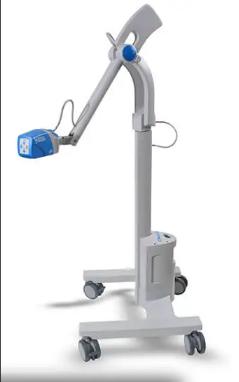
The VEIN EXPERTS arrived like VIPs, hauling a crane-like skyscraper vein-finding device. The towering, dinosaur-shaped machine projected real-time images of the veins on my arms using LED lighting. Locked and loaded, this impressive but intimidating vein robot zeroed in on all my blood-filled veins and got the job done efficiently and mostly pain-free, though not entirely pain-free, because I still had to get IV’d.
ON A SCALE OF 1 TO 10: Several times a day, I was asked, “ON A SCALE OF 1 TO 10, what is your pain level?”
At first, I thought my grandkids would get a kick out of me saying “6-7” while moving my hands up and down, palms upward. But I was in a mood, and not a good one, so it was neither the time nor the place for comic relief.
And anyway, ranking anything ON A SCALE OF 1 TO 10 is totally and objectively subjective, right?
For example, if I tried to play the martyr and said 3, does that mean I’m not in enough pain to warrant pain meds?
Were they asking about my 1 to 10 pain level on a mental or physical scale? Because I might be at a 5 physically but a 10+ emotionally.
And I know 10 is supposed to be the worst pain ever, but what if I rated my pain as a 10 and then, in a few hours, I started to feel even worse pain?
I also know I have a very high pain tolerance, so something that’s a 3 for me could be a 10 for someone else. Shouldn’t my pain threshold count for something?
Which also got me thinking: how can I justify rating 10 as my worst pain imaginable if I have never experienced the most horrific pain, such as being shot or losing a limb?
My ultimate conclusion was that ON A SCALE OF 1 TO 10 was an incredibly naïve and unreliable pneumatic system, unfairly applied to something so medically relevant.
FYI: I mostly answered “2,” even though my pain level was so much worse—at least a 6-7. IDK why I chose the number 2, but I do know there was no pun intended.
I hadn’t been shot. I hadn’t lost a limb. I’d been incredibly blessed with good health.
Until now.
Now I was unfortunately set to lose a huge chunk of my colon, a must-have organ needed to live another day.
ON A SCALE OF 1 TO 10, how would you rank that loss numerically?
THE PRETTY BLONDE NURSE FROM HELL: The first thing I thought when this young nurse wrote her name on the board in my room was that she was beautiful. Her long blonde hair was French-braided, and she had an angelic face. But it didn’t take long for me to be reminded not to judge a book (or a nurse) by its cover.
Maybe it was because the colon, rectal, and surgical ward was swamped with critically ill patients, or maybe she just wasn’t cut out for nursing. Or maybe she was chronically forgetful, or maybe she was having a rough two-plus weeks, though I didn’t buy any of it for a second.
I had myself convinced that THE PRETTY BLONDE NURSE FROM HELL was Nurse Ratched’s evil twin.
I wanted to give THE PRETTY BLONDE NURSE FROM HELL a piece of my mind, but I didn’t dare because I was most definitely at her medical mercy.
NOTE: I wrote an additional 13 paragraphs about THE PRETTY BLONDE NURSE FROM HELL, but then I remembered the wise advice of a near-and-dear mentor who told me on several occasions to “Write from your scar, not from your wound.” Thanks to my mentor, I deleted reams of text I had planned to write about THE PRETTY BLONDE NURSE FROM HELL.
In conclusion, THE PRETTY BLONDE NURSE FROM HELL was a horror, and her shifts came with a side of psychological warfare. I’ll leave it at that.
THE BILE TUBE: The actual medical terminology for THE BILE TUBE is Nasogastric Intubation, and yes, it is as scary as it sounds.
The two unsuccessful attempts by a physician’s assistant to shove a foot-long tube down my throat were nightmarish. The afternoon before my sigmoid colectomy/ileostomy surgery, Miss PA presented me with THE BILE TUBE—which was as wide as a jumbo-size drinking straw and as long as a small garden hose.
She explained that it needed to be snaked through my right nostril, down my throat, and deep into my intestines to suck out the bile that was trying to kill me.
“You must lean down and drink nonstop from this container of water until I’ve placed the tube where it needs to go. Don’t stop drinking. Don’t look up. Keep your head low, low, low. That’s the key.”
I was thinking: how was she going to correctly calibrate the tube’s placement if my head was way, way down low?
But I hadn’t had anything to drink for days, and I was desert-parched and semi-delirious. So I robotically followed the PA’s instructions, hunched down low, and began binge-drinking from the titanic-sized jug of water while she did her bile-tube thing.
Except that midway through the horrific procedure, it felt as if THE BILE TUBE had become stuck, coiling near my lower esophagus, and had failed to descend into the bile, as the PA had promised.
“GET IT OUT, GET IT OUT. I CAN’T BREATHE!!!!! GET IT OUT, OR I’LL PULL IT OUT MYSELF!!!!!”
The PA yanked on THE BILE TUBE, and it shot out of my nose. (I’ll spare you the gory details of what followed.)
As MY HUSBAND watched in wide-eyed horror, his hands clamped over his mouth, I grabbed his arm hysterically, perhaps too roughly. “I CAN’T DO IT. PLEASE TELL HER I CAN’T DO IT.”
The PA looked at me calmly. “You must.”
MY HUSBAND sat in helpless silence, his hands still bolted tightly over his mouth.
After many minutes of the PA trying to convince me that “I must,” I stupidly tried again. This time, THE BILE TUBE became lodged in or near my nasal passage. I screamed like bloody murder.
Once the PA wrenched it out, I asked her—not very politely—to find another patient to torture. She left, but not before saying, “I’ll give you a few minutes.”
I placed my hand on my very sore right nostril, and when I pulled it away, I noticed I was bleeding slightly. When I looked over at MY HUSBAND, he was dumbfounded, though he had finally pulled his hands away from his face. We exchanged no words. What was there to say?
NOTE: The moral of THE BILE TUBE story is: If you are ever in need of one, make sure to do it under anesthesia.
THE PERSUADER: When the PA failed to return within a few minutes, or at all that day, I felt empowered, vindicated, and lucky as hell.
Until around 3 a.m. the morning of surgery, when a woman entered my room, sat at the foot of my hospital bed, and gently patted my legs beneath the scratchy covers. I instinctively knew she wasn’t there for a friendly hospital visit. So much for luck.
THE PERSUADER informed me that if I did not allow her to place THE BILE TUBE down my throat, I would most certainly have to wear THE BAG for months—maybe forever. THE PERSUADER emphasized the word forever.
I didn’t know who she was—I had never seen her before in my hospital life—but I was so delirious that I wasn’t in a normal state of mind, so I regretfully didn’t ask for her ID.
I still had enough of my faculties left to know she was lying because my surgeon had already informed me that, due to the severity of my infected colon, I would absolutely require an ileostomy, i.e., THE BAG.
So I told this woman, whoever she was, that I was A-okay with wearing THE BAG. And that, at this point in my unpleasant hospital journey, I didn’t care if I had a life, let alone if I had to wear THE BAG for the rest of it.
Maybe I was being a tad overly dramatic, but whatever. I figured she would feel my pain or at least understand what I was going through, both mentally and physically.
WRONG.
She looked at me stone-cold, clearly exasperated, and asked me a strange question. One I will not soon forget: “What is it that you want out of life?”
WTF? I wanted to yell, scream, and kick her out of my room, but I was so weak, so out of it, and so thirsty that all I could do was meekly eke out, “Can I have a few ice chips?”
Her answer was as sharp as a Myabi knife. “NOT UNLESS YOU ALLOW ME TO INSERT THE BILE TUBE!”
I rolled over, turned my back to her, mostly because she was beyond scary, and I didn’t dare face her as I said, “I’d rather die of thirst.”
THE BAG, THE BAG EXPERT, AND THE STOMA: After surgery, I woke up with—to no surprise—THE BAG.
What surprised me—although nothing should have surprised me by this point—was that THE BILE TUBE was now shoved painfully deep into my crusty right nostril, past my throbbing throat and into the deep caverns of my stomach.
I had a bladder catheter, with the bag hanging off the left side of my bed. I also had a squeeze bottle full of body fluids hanging off the right side of my bed, just below THE BAG.
And then there was this slimy, red, strawberry-looking thing protruding from my stomach, behind and under THE BAG.
ON A SCALE OF 1 TO 10, I was way, way over and beyond the number 10.
Soon after my surgical discoveries, an overly cheerful nurse entered my room and introduced herself as THE BAG EXPERT. She called me an ostomate as if I should wear this newly acquired label loud and proud.
THE BAG EXPERT explained that she was the Stoma/Ostomy care guru, commonly known as the WOC Nurse (Wound, Ostomy, and Continence Nurse). I sat quietly, even though I wanted to scream.
THE BAG EXPERT walked me through everything I needed to know about my medical debacle. She went into more detail than I wanted or needed. I wasn’t just emotionally demolished; I was in full-blown life-tragedy mode.
THE BAG EXPERT went into horrifying detail, explaining that the moist, red, scary thing gurgling and protruding from the right side of my stomach, protected by THE BAG, was THE STOMA.
THE WHAT?
THE BAG EXPERT clarified what my surgeon had already explained: a piece of my small intestine (the red thingy, aka THE STOMA) was brought out through my abdominal wall to allow digestive waste to bypass its usual route out.
My answer? “YOU’RE TOTALLY FREAKING ME OUT.”
But THE BAG EXPERT apparently failed to pick up on my explosively overloaded self. She matter-of-factly warned me that THE BAG had a mind of its own and filled up quickly, so “we” needed to get ahead of it. “We” needed to stay on top of it. “We” needed to make sure THE BAG didn’t get too full and burst.
WE????
AND THIS THING COULD BURST????
THE BAG EXPERT ripped open an individually wrapped package, revealing a plastic contraption she called a “skin barrier wafer.” The package also included a paper L-ruler, which she held up for me to see. “You’ll need to cut a precise opening in your wafer by measuring THE STOMA with this ruler. Do you sew at all?”
Her use of the phrase “your skin barrier wafer” paralyzed me. As if I wanted to claim ownership of any of this.
AND NO, I DON’T SEW.
I couldn’t believe what I was hearing, except that I was definitely hearing it.
To make matters worse, THE BAG EXPERT followed up with: “You’ll need to pack an emergency kit and carry it wherever you go in case of spillage. Bag leaks happen from time to time.”
SPILLAGE?
I replied through tears, “I PLAN ON GOING NOWHERE.”
Then, through a sh*t-load of more tears (I know what you’re thinking), I anxiously told THE BAG EXPERT I needed to call MY HUSBAND.
She ignored my complete meltdown and responded: “You’ll get used to THE STOMA, mostly because it’s a living, breathing part of you that you’ll have to deal with now. You have no choice. You’re stuck with it.”
I was beyond horrified.
But then matters got worse when she said: “Many people with ostomies name THE STOMA. Giving it a nickname will help you adapt and accept it, since THE STOMA and THE BAG will be a huge part of your life for quite some time.”
PEOPLE NAME THIS THING?
She giggled as she told me some of the names people give to THE STOMA and THE BAG: Betty Poop, Pinky, Perky, Poopy Head, and Winnie the Poo.
My response was to ugly-cry while begging for MY HUSBAND.
Little did I know that on that fateful first day after surgery, THE BAG EXPERT would end up becoming my psychologist, tutor, best hospital friend, and confidante.
Don’t get me wrong. THE BAG EXPERT fully understood that I was devastated and overwhelmed by having an ostomy bag, but I was stuck with it, stuck to me.
So she taught me—as best she could—what I needed to do, coaxing me every step of the way, and prepared me, as patiently as possible, for my unwanted and unwelcome destiny.
I found THE BAG repulsive, and FYI, so did the nurses, the PA’s, the orderlies, and everyone except THE BAG EXPERT.
NOBODY wanted anything to do with THE BAG, and how could I blame them when I wanted nothing to do with it myself?
Without a word, I knew 100% they all dealt with THE BAG with obvious disdain, pawning off the job of “dealing with it” on whomever they could. That meant the sh*tty job (don’t think it) fell to the lowest of the low on duty—male or female—though I insisted on a female.
My insistence on a female often left me without anyone to assist me, leaving me frightfully alone to attend to THE BAG.
I was alone, yet not alone, because my hospital room was always buzzing with staff. There was no such thing as prideful privacy in THE HOSPITAL, only a dehumanizing free-for-all that pushed me even further into a cavernous, deeper-than-deep depression.
THE SURGICAL TEAM OF THE EAGERLY: Pre- and post-surgery, the ebullient SURGICAL TEAM OF THE EAGERLY filed into my room in military-style close-order formation every morning at around 6:30 a.m. They then gathered in a circle—10 to 12 strong—around my bed.
Someone on THE SURGICAL TEAM OF THE EAGERLY was always the announcer:
“GOOD MORNING. I’M HERE WITH THE SURGICAL TEAM!!!!!!”
The announcement was always very, very loud, as if my problem were deafness.
Someone always followed up (also loudly): “HOW DO YOU FEEL TODAY??????”
But they never gave me time to answer. Or when I did answer, it didn’t seem important because they were eager to move on to the next medical task.
THE SURGICAL TEAM OF THE EAGERLY competed with one another, yearning to please the attending surgeon of the day.
With the fluorescent light blaring overhead, one of THE SURGICAL TEAM OF THE EAGERLY would receive the privilege of examining me while the rest of the gang hovered and stared jealously.
My insistence on a female examiner mostly fell flat and was usually ignored. Once someone from THE SURGICAL TEAM OF THE EAGERLY was appointed, they would pull back my sheet and then my hospital gown, exposing me to the entire entourage—men and women—without regard for how awkward, uncomfortable, or exposed I felt.
Every morning, THE SURGICAL TEAM OF THE EAGERLY marched into my room in close-order formation, performed their duties, then marched out in close-order formation. A team of early-morning hospital soldiers, rinsing and repeating.
DAY-TO-DAY: Water was my Venus. I drowned myself in it, mainly because I was beyond thankful to have it after more than five days of scorched-earth dry mouth.
My DAY-TO-DAY consisted of counting the hours until the next dose of pain medication was due. I had a one-track pain-med mind: impatiently waiting for the short-term fix and a brief reprieve from the pain of breathing, coughing, sneezing, and aching, while hoping to dull the mental anguish as well.
On one DAY-TO-DAY, I noticed an ugly, deep-purple vein running down my left leg just below my knee. I assumed it was permanent and expected to feel upset, but I didn’t care because, by then, I lacked the strength or wherewithal to feel anything at all.
On another DAY-TO-DAY, I stared at the six-inch incision running vertically down my stomach, crossing over my C-section scar like a highway bypass. Six to seven additional horizontal incisions, about two inches wide, used for the camera and surgical tools, were not only painful but also downright ugly.
The indented incisions were scattered helter-skelter across the stomach I had taken such pride in keeping toned with daily crunches. I was unusually uncaring and physically revolted, yet helplessly resigned.
I bravely accepted the whole magilla: the drain, THE BILE TUBE, the bladder catheter, and THE STOMA—that icky, living, breathing red mound that oozed and spurted waste into THE BAG.
I accepted it all, shockingly and mostly in silence, because, well, what else could I do?
Unaccept it?
Oh, if only it were possible.
DO I SMELL LIKE OLD PEOPLE?/OLD PEOPLE SMELL: What I couldn’t/wouldn’t accept, though, was the possibility that I might be guilty of OLD PEOPLE SMELL.
Yeah. It’s a thing, and I was obsessed with the question: DO I SMELL LIKE OLD PEOPLE?????
I kept smelling myself, and although I didn’t catch even a whiff of OLD PEOPLE SMELL, I still wasn’t entirely convinced.
When I asked MY HUSBAND to smell me, he dutifully complied and then replied, “Don’t worry about it.”
DON’T WORRY ABOUT IT????? DON’T WORRY ABOUT WHAT?
WAS HE SUGGESTING I SMELL LIKE OLD PEOPLE?
When I grilled him about his cryptic answer, he paused too long before replying, “Who cares?”
Which caused me to give MY HUSBAND the stinkiest of tear-filled stink-eyes. “On top of everything I’m going through? REALLY?”
His lawyerly retort was: “Calm down. I never implied that you smell like old people, and for the record, you don’t.”
WHEW!
But even if I did smell like old people, what the hell could I do about it? Let the record show that, as with everything else happening to my miserable self, OLD PEOPLE SMELL was also beyond my control.
MY HUSBAND then reminded me that nothing mattered except that I live to see another day.
Speaking of another day, on what I had hoped would be my last day in THE HOSPITAL, the latest thing beyond my control was my dangerously low white blood cell count, which meant I was NOT going home that day or the next day or the day after that. I was desperate to get out of THE HOSPITAL, but the thought of a life-threatening infection shut me up and put a stop to my whining. Well, maybe not a full stop to my whining, but a mini pause.
A DAY IN THE LIFE OF THE HOSPITAL STAFF: As each nurse, doctor, orderly, or PA asked me, “On a scale of 1 to 10, how would you rank your pain?” I began to rank them on a scale of 1 to 10.
Most of them were angels, except for THE PRETTY BLONDE NURSE FROM HELL (who I am convinced was in cahoots with THE PERSUADER, since they were both on duty that early morning).
I was deeply depressed, yet mysteriously and ironically forever changed for the better by my harrowing, life-altering experience.
Three weeks is a long time to spend in a hospital, and I got to know many of the staff. I felt fortunate that they were comfortable enough with me to share their stories.
And there were so many heartfelt stories. Here are but a few…
An IV expert from the Philippines told me he had a nine-year-old son still living there, patiently waiting to come to New York to be with the father he barely knew. When he showed me a photo of his gorgeous boy, whom he hadn’t seen in five years, tears rolled down his cheeks.
And the day nurse, sadly struggling through her first day back from maternity leave. She confided in me that she was miserable yet resigned, happy, and thankful. She missed her twelve-week-old baby terribly, but having seen the worst of the worst as a nurse, she was grateful that she and her baby were healthy and that she had a fairly good-paying job.
Or the night nurse in charge, who made a point of coming into my room in the wee hours of the morning after she discovered that her mother and I shared the same birthday and year. Her voice broke as she confided that her single mom died way too young from colon cancer, leaving her to care for her now-adult autistic brother. She took me as a sign that her mother was nearby.
My favorite, the twelve-hour shift nurse’s aide, worked three jobs and diligently and happily helped me stay on top of THE BAG situation when no one else wanted anything whatsoever to do with it. “Please let me help you.” Her words, said so earnestly, brought me to tears every time she offered them.
A phlebotomist sadly opened up to me about despising her job as “a vampire,” how she hated being hated by the patients, and how she would leave the job in a second if she didn’t need the money so badly. With three kids and a husband out of work, this was her life, though she never imagined she would end up with a life like this.
Then there was another phlebotomist whose son took her car the night before, promising to return it but never did, leaving her scrambling for a ride to work in the wee hours. She ended up taking three buses, which took hours, but she was thankful to get to work on time, though she was scared out of her mind that something might have happened to her son. If nothing bad had happened to her son and he was just being irresponsible, she would be furious, but right now she was a nervous wreck. “My four kids are sometimes out of control, and my grandkids are mostly lost. I ask myself every day: How did I get here?”
And last but not least, there was the thirty-three-year-old nurse who confessed to being sexually assaulted by her male cousin as a child and no longer speaks to her mother, even though her mother swears she didn’t know. I assumed this nurse opened up to me because she read my chart and saw the reason for my PTSD diagnosis. I wanted to ask, “How old were you?” but the haunted look on her face stopped me. Instead, I whispered, “I’m so sorry,” silently reminding myself of what I knew from my own unfortunate experience: she would likely never recover.
All of their stories touched me deeply. I was incredibly proud of myself for somehow being the kind of hospital patient they felt comfortable enough to open up to.
Which prompted me to reassure myself that maybe I wasn’t an annoying, crying mess of a nut job after all.
And the coup de grâce?
MY HUSBAND: When we both promised “in sickness and in health,” I never gave those words much thought. Okay, I never gave them ANY thought.
I doubt many (if any) couples think about nursing their partner through sickness on their wedding day unless their partner is already sick.
One has to wonder whether any of us truly know if we have what it takes to bear the weight of someone else’s sickness until faced with it.
And yet, now I know: MY HUSBAND is here for me through sickness.
I wish I had known, ten, fifteen, or twenty years ago, what I know now. I would have been more patient, more understanding, and far more loving.
ON A SCALE OF ONE TO TEN, I would have counted to ten many more times than I did.
Marriage is a curious thing. A blend of wonder, challenges, child-rearing, unexpected twisty turns, work demands, financial stress, and personal identity (both individual and shared).
Marriage has its ups and downs, its ebbs and flows. But until a life-or-death crisis arises, how could anyone know whether your supposed soulmate will be there for you when you’re medically down and out?
But now I know.
MY HUSBAND is a loving, caring, devoted, patient, and funny partner—in sickness.
Our marriage was never perfect, but it has never been on more solid footing because he came through for me when I needed him most. I will never forget it, and I owe him big time.
A promise made was a promise kept, and I feel incredibly blessed and exceedingly lucky to have MY HUSBAND to lean on and rely on.
I would NEVER have survived the past three months (and counting) without MY HUSBAND. He has faithfully carried me through day after impossible day.
MY HUSBAND has not only put up with my depression but has also been the only one able to pull me out of it.
And MY HUSBAND has made me laugh. Hard. So hard it literally hurt my recovering body, yet it soothed my soul.
This medical mess I’m in was the ultimate test, and MY HUSBAND came through with flying colors.
I should have known MY HUSBAND would swoop in to save me from myself, but I didn’t.
But now I do. And now that I know, I will never un-know for as long as we both shall live.
MY SECOND CHANCE: I have always lamented and agreed with the opinion of the writer Henry James on second chances:
“A second chance—that’s the delusion. There never was to be but one.”
But that was before all this. Now I know Henry James was wrong.
I now have no doubt that second chances are possible because God has blessed me with one.
And I intend to take full advantage of it, and I look forward to the day when I can make the most of the time I have left.
In the meantime, summer turned to fall. The months turned me inward, anxiously praying for a surgical reversal of my fate, ticking off the days as I had as a child, impatiently waiting for Christmas.
Wasting my valuable time as an infirm has been excruciatingly sad yet deeply enlightening and eye-opening.
My life is more precious than I ever imagined it could or would be. Every ordinary thing, every quiet scene—every everything—has taken on life-changing meaning.
I’ve not only rediscovered my strength and resolve but have also experienced everything around me as if I were seeing and living the everyday mundane for the very first time.
Or maybe I’m subconsciously worried that I might be experiencing everything around me as if I were seeing or living the everyday mundane for the very last time.
I have a newfound respect for my body, and I’m consumed by how important it is to care for it.
I quit drinking alcohol and eating beef, fried foods, anything with nitrates, and junk food almost two years ago, but I’m now even more diligent about everything I put into my system, not only because I have to, but because I want to.
Mostly because I want to live.
Speaking of living, I now see God’s fingerprints everywhere.
The chatty birds, the bees battling the butterflies for the last of the flowers’ pollen. The magnificence of the full moon, the star-studded sky, the howling wind, and the raging rain during the recent Nor’easter.
I revel in the everyday, yet mourn the precious time I’ve lost.
Anniversaries and birthdays came and went, as did the start of school and the Jewish holidays.
As I declined invitations to poetry readings and Jewish Community Center meetings, I felt deep remorse for being unable to attend due to my health.
I haven’t updated my blog in months; my news website sits neglected online; my two book projects are languishing; and my author portal desperately needs fresh content.
I barely recognize my newborn grandson in the myriad photos I receive daily via text from my precious daughter, and I have come to the sad realization that my beloved infant legacy doesn’t recognize me at all.
I barely recognize myself.
Everyday life has taken on deeper, more urgent meaning.
Blistery, air-conditioned, sunny days gave way to open windows that let in a cool, undulating breeze.
The changing of the seasons, the turning of the autumn leaves, the feral cats searching for a warm place to sleep, and the end of daylight saving time.
During these many months, mostly bedridden, I’ve forced myself to believe that God has a plan for me. Now I just need to figure out what that plan is.
And I thank God every day that Henry James was wrong and that a second chance was never a delusion.
I’m not sure I’ll ever get back to myself, and I’m not sure I even want to.
What I am sure of is who has been there for me.
Who cared about me, checked in, missed me, noticed my absence, and who my real friends and family are or aren’t.
So many of them surprised me—going both ways.
And I’m so very sure of MY HUSBAND, who has tenderly nursed me through these difficult lost months.
I’m looking forward to possibly beating this thing. But I’m mostly looking forward to my second chance, my last chance to make the most of the rest of my life, with MY HUSBAND right beside me.
THE END: And now for THE END of this blog post, although hopefully not THE END of my medical journey.
I look forward to THE END-END, which, for me, is the surgical reversal of my ileostomy.
It could be soon, or it could be never. Never is the fear, but I have faith.
Until a reversal is or isn’t possible, all I can do is pray my surgeon can put Humpty Dumpty back together again.
And now, to my readers, my family, and my friends:
Thank you for sticking with me through this long read. You made it to THE END!
And a special thank you to all of you who have called, visited, and sent your best wishes to me for a successful outcome to this seemingly never-ending and arduous journey.
No words can ever express how grateful I am to have each and every one of you in my life.
Your continued love and support, along with my second glorious chance, will surely carry me through to what comes next.